


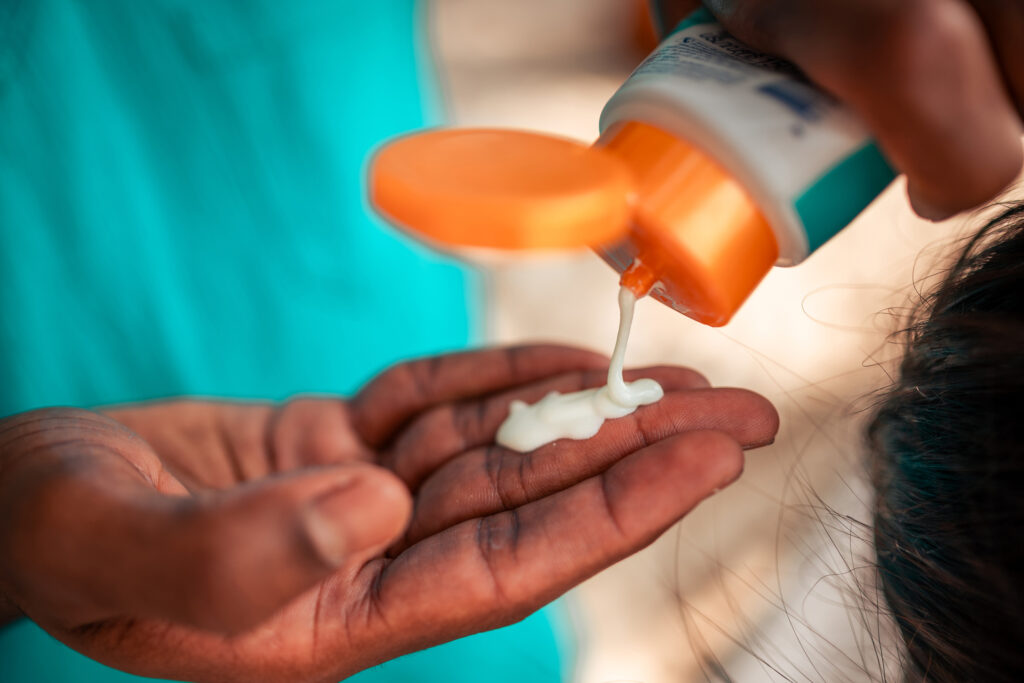
Officials, environmental health advocates, and skin care industry groups are expressing hope that the Food and Drug Administration’s approval of a sunscreen ingredient on June 9 — after consideration for two decades, and global use for nearly as long — will help restore Americans’ wavering faith in sunscreen.
“Bemotrizinol has been used safely in Europe for decades,” Health and Human Services Secretary Robert F. Kennedy Jr. said in the announcement about the approval. “FDA’s action will increase competition and consumer confidence in sunscreen products.”
Nonprofits that advocate for health, such as the Environmental Working Group, and the skin care industry alike had lobbied for approval of the ingredient, which makes sunscreens sheerer and lighter on the skin than many available American options while blocking a wider spectrum of ultraviolet rays that can cause premature aging and skin cancer.
The newly approved sunscreen filter will allow companies to reformulate sunscreens to address consumers’ concerns, said Carl D’Ruiz, a senior manager at DSM-Firmenich, a Swiss maker of sunscreen chemicals that applied for the FDA approval. In addition to allowing companies to offer what the FDA calls safe and effective formulations, he said, the approval will allow sunscreens that are more like sought-after South Korean brands to be sold in the U.S. by autumn.
Confidence in U.S. sunscreen has faltered on two fronts: among those concerned about what’s in the sunscreens they use and those who believe sun exposure is healthy. But will the new ingredient win the trust of Make America Healthy Again skeptics and Gen Zers intentionally tanning? RFK Jr., strikingly bronzed, has helped stoke this confusion by pledging in 2024 to fight what he called the FDA’s “war on public health” and “aggressive suppression” of sunshine. Under his leadership, the FDA backed away from a plan in March to ban people under 18 from using tanning beds.
All this matters because 1 in 5 people will develop skin cancer by age 70 in the United States. It is the most common cancer in the nation, where about 3.3 million people are diagnosed each year with basal and squamous cell carcinomas.
D’Ruiz said he thinks bemotrizinol, also known as BEMT, will change the dynamic. “People will talk more positively about sunscreens,” he said.
In the U.S., new sunscreen chemicals are regulated as over-the-counter drugs like aspirin or cough syrup rather than as cosmetics, as in Japan and the European Union. That means they face more elaborate testing and safety protocols, such as animal testing that runs afoul of EU laws, which is why the approval process for bemotrizinol took nearly two decades, D’Ruiz said.
What’s “generally recognized as safe and effective,” otherwise known as “GRASE” in FDA-speak, is at the center of the American sunscreen debate. Bemotrizinol joins zinc oxide and titanium dioxide on the FDA’s GRASE list.