


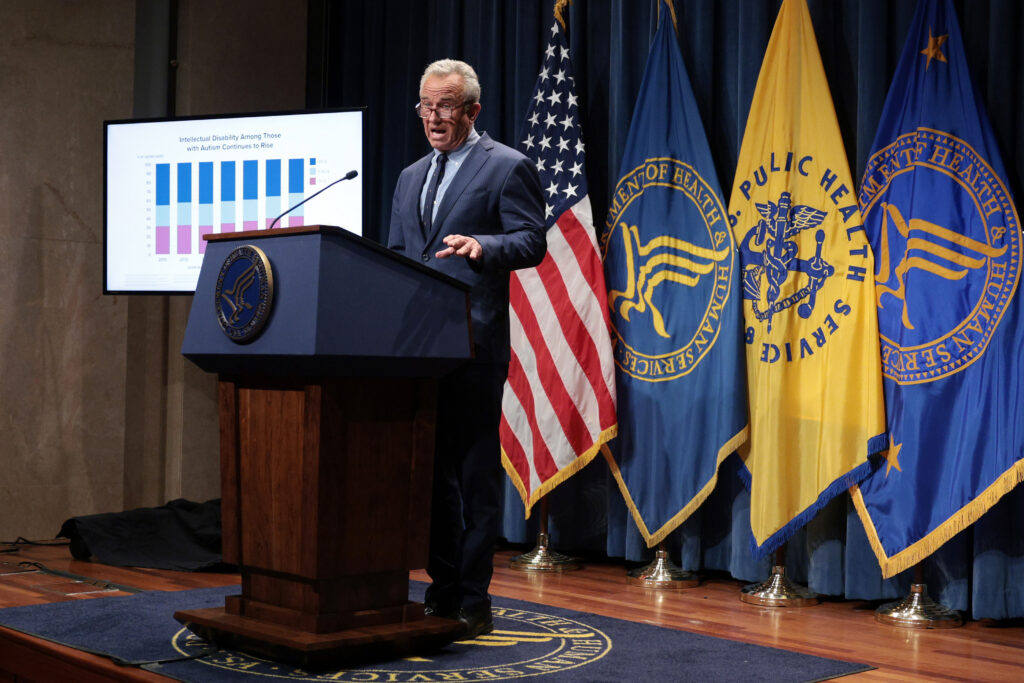
U.S. health secretary Robert F. Kennedy Jr. is pursuing federal government access to most Americans’ medical records, in a quest to research a link between vaccines and autism — a connection the medical establishment studied for decades and flatly rejects.
The Department of Health and Human Services is seeking data from little-known state systems that allow hospitals and clinics to exchange detailed, identifiable patient information, KFF Health News has learned.
In private meetings, some public health leaders have objected to giving Kennedy’s team access to such data, raising doubts that it’s legal or that the information would even be useful.
They have also expressed concerns about allowing the federal government to peer into the minutiae of Americans’ medical records, which could mean viewing anything from doctors’ notes to prescription history. HHS has offered no insight into how it will protect or handle the personal health information it obtains.
But Kennedy told KFF Health News that medical records are key to investigating the cause of autism, vaccine safety, and chronic diseases. And millions of dollars in grant money has poured into a Nebraska nonprofit that has assisted Kennedy’s effort, according to state records.
He and his advisers have been frustrated that federal access to Americans’ medical records has been limited.
“We need a good health record system, and one of the things that really surprised me most when I came into office is that there is — that the systems are broken,” Kennedy said in a May interview. “We’ve had to go to the states and, luckily, we’ve got a lot of cooperation from the states, but we now have databases together that we can actually do the studies on. Those studies are in motion.”
HHS has not publicly announced any new projects involving medical records and autism or vaccine research. Kennedy faced blowback last year when he proposed compiling the medical records of people with autism to create a federal disease registry — which health department officials later disputed was underway.
But Kennedy said in May, “We have a whole pipeline of studies that will be done over the next year.”
Though the White House has steered Kennedy away from further changes to U.S. vaccine policy ahead of November’s crucial midterm elections, President Donald Trump has regularly echoed Kennedy’s doubts about vaccine safety and last week signed an executive order calling for the U.S. to reduce the number of vaccines recommended for children.
Kennedy’s political appointees and allies — including William “Reyn” Archer III, a former Texas health official and vaccine critic whom Kennedy hired as a senior adviser — have led the initiative for the health department to collect and examine medical records.
William “Reyn” Archer III, a former Texas health commissioner, attends the Advisory Committee on Immunization Practices meeting at Centers for Disease C