
Connect with us

HealthNews

US Scientists Sequence 1,000 Genomes From Measles, a Disease Long Eliminated With Vaccines

​This week, the Centers for Diseases Control and Prevention posted online its first large tranche of advanced genetic data from measles viruses spreading last year. Scientists with knowledge of the operation expect the agency to post heaps more in weeks to come, revealing whether the U.S. has lost its hard-won measles elimination status.

The CDC withheld the data for months as a team hit hard by mass layoffs and resignations sorted through the information. But now that scientists at the agency have posted their first batch of whole measles genomes — the genetic blueprint of the viruses — the rest should “start flowing more smoothly at a more rapid cadence,” said Kristian Andersen, an evolutionary virologist at the Scripps Research Institute who isn’t involved with the CDC’s effort but is following it.

The CDC did not answer queries from KFF Health News on its timeline for publishing measles data or analyses. However, once all the data is public, researchers can run quick initial analyses that will signal whether outbreaks across the U.S. last year resulted from the continuous spread of the disease between states, rather than separate introductions from abroad. If there was continuous transmission for a year, that means the U.S. has lost its status as a country that has eliminated measles. That status, which the U.S. has held since 2000, reflects a country’s vaccination rates: Two doses of the measles-mumps-rubella vaccine prevent most infections and so stop outbreaks from growing.

More careful analyses take weeks.

“We should see a report in April,” Andersen said, “assuming no political interference.”

This is the first time that the U.S. has applied sophisticated genomic techniques to measles, which largely disappeared from the country a quarter-century ago because of broad vaccine uptake.

Declining vaccination rates, misinformation, and the Trump administration’s budget cuts and lagging response to outbreaks have fueled a resurgence of the disease. With at least 2,285 cases in 44 states, 2025 was the worst year for measles in more than three decades. This year is on track to surpass that, with 1,575 cases as of late March.

While welcoming the science, researchers say the government’s top priority should be to stop the virus from spreading.

“I think it’s incredibly important to do whole genome sequencing for outbreaks,” Andersen said, “but we shouldn’t need to do this for measles in the first place, because we have an extremely effective and safe vaccine.”

“That we’re even talking about this is nuts,” he added.

Health and Human Services Secretary Robert F. Kennedy Jr. and other government officials should sound an alarm about measles’ comeback and launch nationwide vaccine campaigns, said Rekha Lakshmanan, executive director of The Immunization Partnership, a nonprofit in Houston that advocates for vaccine access.

“I applaud the science,” she said, “b  

Continue Reading
Click to comment

Leave a Reply

Your email address will not be published. Required fields are marked *

HealthNews

CDC’s Acting Chief Promises a Return to Stability in a Tumultuous Moment
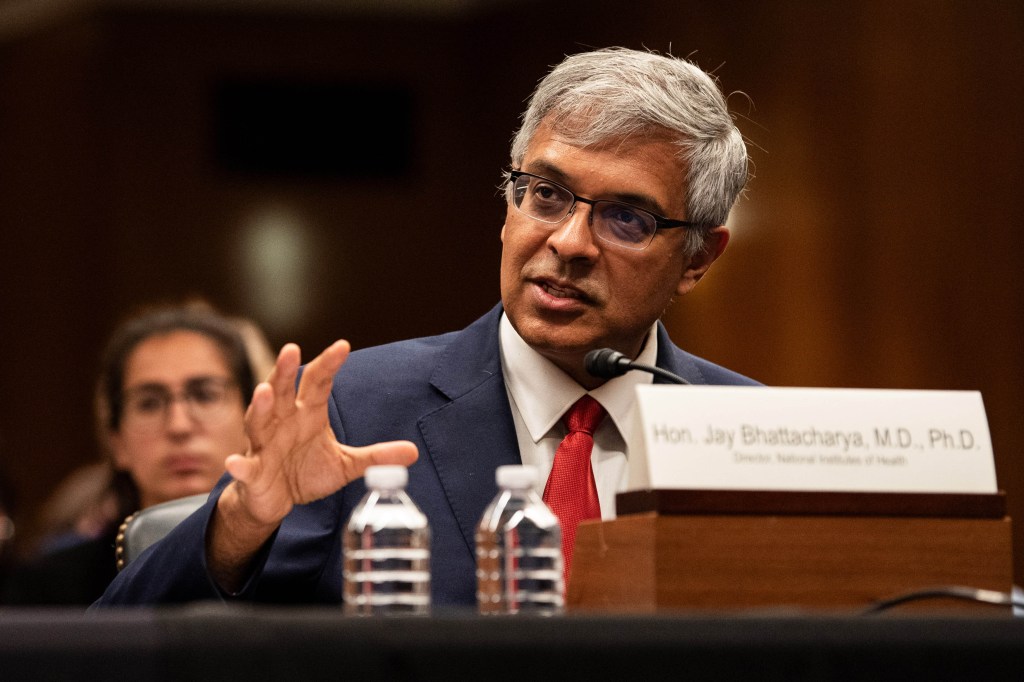
​President Donald Trump will soon nominate a permanent director for the Centers for Disease Control and Prevention, its acting chief, National Institutes of Health Director Jay Bhattacharya, told agency employees at a Wednesday staff meeting.

According to a recording obtained by KFF Health News, Bhattacharya at one point suggested to CDC staff that Trump could name a new leader for the agency as soon as Thursday. “But if not, I don’t think much will change,” he said.

Though his official position as acting director was set to expire Wednesday, Bhattacharya will continue to lead the agency until the top spot is filled. Meanwhile, news outlets including Axios and The Washington Post reported that the administration was postponing filling the permanent director job amid the challenges of gaining Senate confirmation and other political pressures.

Bhattacharya opened the meeting by acknowledging the struggles the beleaguered agency has gone through over the past year. Workers faced waves of job losses, and a gunman attacked the CDC’s Atlanta campus in August, killing a police officer and causing significant property damage. “I want to acknowledge very honestly that I know that it has been such a difficult year for the CDC and for every single one of you here,” Bhattacharya said.

He said the agency has begun to fill its leadership gaps. During his first meeting with the agency’s top leaders, he said, “I noticed almost every single one of them is acting.”

“We’ve made progress in filling key roles across the agency,” he said. “Leadership stability is essential to delivering our mission.”

The aim, he said, is to leave the agency in “a solid, secure place” so it can do its work “without so much of the turmoil that we’ve seen the last year.”

Bhattacharya invited questions from the CDC staffers, who repeatedly asked about staffing losses, morale, and their job security, as well as Trump’s decision to withdraw from the World Health Organization.

“The politics of WHO withdrawal are above my pay grade,” Bhattacharya said. “What I do know is that without the CDC, the world will be in much worse health.”

Workforce Concerns

One employee told Bhattacharya the agency had lost a “huge amount” of “internal capacity and expertise in the past year” and it “continues to be very challenging for staff to do their jobs,” adding that “certain conditions are a bit demoralizing.”

The CDC can “function without leaders,” another speaker said. “We function without directors. And this entire team will make CDC run without you if you’re not here.”

Schedule F, an effort to reclassify certain federal employees in policy-related roles and reduce their civil service protections, drew some of the strongest statements from the staff. While it’s not fully implemented, the policy could make it easier for Trump to fire thousands of federal workers.

“What’s scaring  

Continue Reading

HealthNews

Demoralized CDC Workforce Reels From Year of Firings, Funding Cuts, and a Shooting
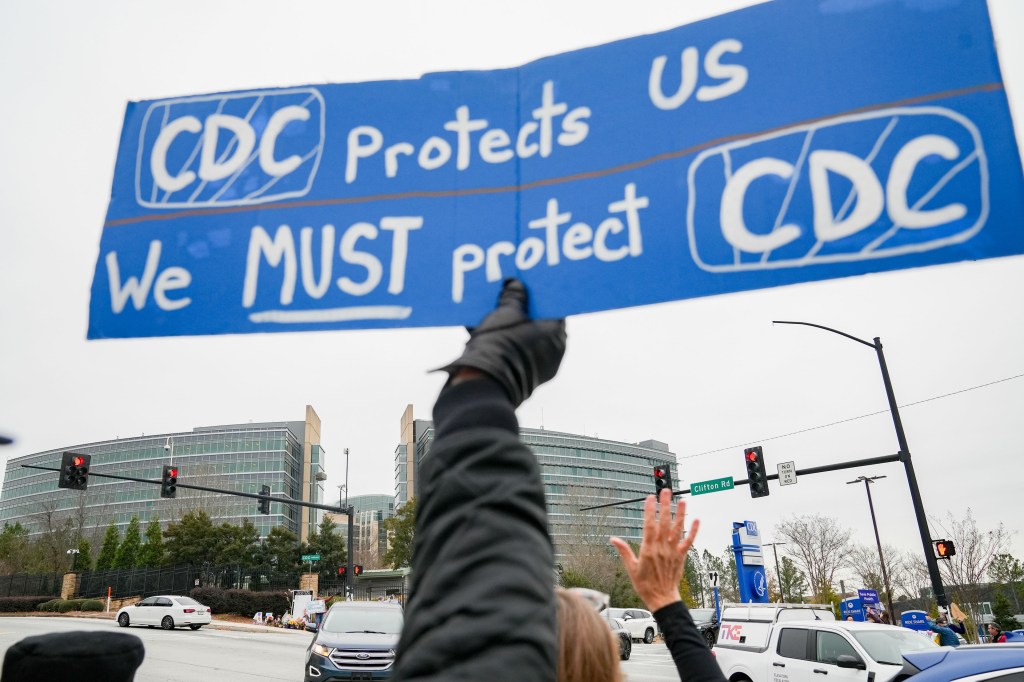
​On the coffee table at her home in Atlanta, Sarah Boim has a pile of documents from her old job at the Centers for Disease Control and Prevention. They are printouts of her employment records.

Boim lost her job in the first big wave of CDC firings — more than 1,000 people were suddenly let go last February.

“This is the termination letter. I also printed off my performance review from 2024,” she said. “I knew I wouldn’t have access to it, and everything was so chaotic that I needed proof of what was happening.”

Boim worked in the National Center for Environmental Health/Agency for Toxic Substances and Disease Registry, handling communications about radon, substances known as forever chemicals, lead poisoning, and other health threats.

Rereading her termination letter, she still can’t believe what it says.

“The agency finds you are not fit for continued employment because your ability, knowledge, and skills do not fit the agency’s current needs, and your performance has not been adequate to justify further employment at the agency,” the emailed letter reads.

“And that floored me,” Boim said, “because my performance was rated outstanding, and I even got a raise. It was just deeply insulting. So I was more upset than I think I was prepared to be.”

The Trump administration later brought back some of the workers who were fired in the first round, but it has also cut more staff and funding.

The CDC has been without a permanent director for more than six months. Recently the Trump administration made Jay Bhattacharya the CDC’s interim director, while he also runs the National Institutes of Health.

The leadership uncertainty comes amid a year of disruption and dismissals at the Atlanta-based institution, from which more than 3,000 public health workers are now gone. That includes staffers the Trump administration terminated and workers who accepted early retirement.

Ripple effects of the turmoil are still hitting the Atlanta region.

By the end of 2025, the CDC had lost roughly a quarter of its workforce.

Boim now works as a contractor in the health field, while also working a non-health-related freelance job. But she mourns the cuts at the CDC, and how the loss of expertise and resources will trickle down to communities. A significant portion of CDC funding goes directly to states and local public health departments.

“It will cause generational harm, which always makes me tear up,” Boim said. “The harm that’s going to come to people that don’t even know what CDC was protecting them from.”

“But for Atlanta, there’s a lot of us; there are thousands of CDC employees that live here,” she added. “We are your friends, your neighbors, your family, and — with the lost income — it has an impact on local businesses also.”

At the SriThai restaurant across the street from the main CDC campus, more than a third of the customers are CDC employees, said manage  

Continue Reading

HealthNews

¿Qué tan bajo se puede llegar? Las cambiantes guías para el control de la presión arterial

​La paciente fue por primera vez a ver a Mark Supiano en 2017 porque su familia estaba preocupada:  estaba perdiendo la memoria a corto plazo.

Mientras revisaba su historial y signos vitales, Supiano, geriatra en la Universidad de Utah, observó una señal preocupante: su presión arterial era de 148/86, por encima de lo normal a pesar de que tomaba dos medicamentos para bajarla. “Claramente era demasiado alta”, dijo recientemente.

Varios factores podrían haber contribuido a ese número, incluidos el medicamento antiinflamatorio que la mujer de 78 años tomaba para el dolor de artritis, una dieta alta en sodio y la falta de ejercicio regular. También le dijo a Supiano que solía beber un par de copas de vino cada noche.

Después de que Supiano hablara con ella sobre formas de reducir su riesgo, la mujer y su esposo se inscribieron en un gimnasio. Dejó el antiinflamatorio y redujo la sal y el alcohol, lo que llevó su presión sistólica a un rango de 130 a 140 —todavía hipertensión, según las guías publicadas por la Asociación Americana del Corazón (AHA) y el Colegio Americano de Cardiología (ACC) a finales de ese año, pero más aceptable. (La sistólica es el número superior en la medición de la presión arterial y el más importante desde el punto de vista clínico).

Sin embargo, para 2019, la paciente tenía un diagnóstico de deterioro cognitivo leve y comenzaban a surgir evidencias médicas sobre la relación entre la hipertensión (el término médico para presión arterial alta) y la demencia. “No fui tan agresivo como debí haber sido”, recordó Supiano. Agregó un tercer medicamento para la hipertensión y sus cifras bajaron a 120 o menos.

Las guías cambiantes para el control de la presión arterial pueden recordar a las personas de mayor edad un baile de moda en su juventud: el limbo. Como decía Chubby Checker: “¿Qué tan bajo puedes llegar?”

Durante más de 25 años, una lectura de 140/90 o menos se consideró normal, según las guías de la AHA/ACC. Pero la actualización de 2017 introdujo cambios importantes, respaldados por los resultados del ensayo SPRINT, que incluyó a adultos mayores de 50 años con alto riesgo cardiovascular.

El ensayo SPRINT encontró que un tratamiento intensivo dirigido a reducir la presión sistólica por debajo de 120 disminuía el riesgo de ataques cardíacos, accidentes cerebrovasculares, otras enfermedades cardiovasculares y la mortalidad general de manera tan significativa que los investigadores detuvieron el estudio antes de tiempo para ofrecer recomendaciones.

Consideraron que no era ético negar a la mitad de los participantes los beneficios del tratamiento intensivo. Por eso, las guías de 2017 recomendaron medicación para quienes tenían una presión sistólica superior a 130.

Las revisiones más recientes, publicadas a finales del año pasado, promueven un control aún más estricto. Recomiendan que los pacientes con ries  

Continue Reading

HealthNews

Journalists Shine Light on Out-of-Reach Insurance Prices, AI’s Role in Claims Disputes, and Susie Wiles

Latest haryana news 247

​KFF Health News senior correspondent Renuka Rayasam discussed the KFF Health News series “Priced Out,” which focuses on the health insurance crisis, on An Arm and a Leg on March 19.

Click here to hear Rayasam on An Arm and a Leg (starts at 21:03).

Read Rayasam’s “When Health Insurance Costs More Than the Mortgage.”

KFF Health News rural health reporter Andrew Jones discussed the spread of measles across the Carolinas on WUNC’s Due South on March 17.

Click here to hear Andrew Jones on Due South.

Read Jones’ “Hospitals Fighting Measles Confront a Challenge: Few Doctors Have Seen It Before.”

Céline Gounder, KFF Health News’ editor-at-large for public health, discussed on CBS News 24/7’s The Daily Report on March 16 how U.S. hospitals and insurers are turning to AI to settle disputes over medical claims and payments. On March 17, she outlined the court ruling blocking the Trump administration’s vaccine policy changes for children on CBS News’ CBS Mornings. Gounder also discussed Susie Wiles’ decision to stay on as White House chief of staff amid breast cancer treatment on CBS News 24/7’s The Takeout on March 16.

Click here to watch Gounder discuss hospitals, insurers, and AI on The Daily Report.

Click here to watch Gounder discuss vaccine policy changes for children on CBS Mornings.

Click here to watch Gounder discuss White House chief of staff Susie Wiles on CBS Mornings.

KFF Health News is a national newsroom that produces in-depth journalism about health issues and is one of the core operating programs at KFF—an independent source of health policy research, polling, and journalism. Learn more about KFF.USE OUR CONTENTThis story can be republished for free (details).  

Continue Reading

HealthNews

What the Health? From KFF Health News: RFK Jr.’s Vaccine Schedule Changes Blocked — For Now
​The Host

Julie Rovner
KFF Health News

@jrovner

@julierovner.bsky.social

Read Julie’s stories.

Julie Rovner is chief Washington correspondent and host of KFF Health News’ weekly health policy news podcast, “What the Health?” A noted expert on health policy issues, Julie is the author of the critically praised reference book “Health Care Politics and Policy A to Z,” now in its third edition.

Health and Human Services Secretary Robert F. Kennedy Jr.’s effort to change how the federal government recommends vaccines against childhood diseases was dealt at least a temporary setback in federal court this week. A judge in Massachusetts sided with a coalition of public health groups arguing that changes to the vaccine schedule violated federal law. The Trump administration said it would appeal the judge’s ruling.

Meanwhile, some of the same public health groups continue to worry about the slow pace of grantmaking at the National Institutes of Health, which, for the second straight year, is having trouble getting money appropriated by Congress out the door to researchers.

This week’s panelists are Julie Rovner of KFF Health News, Alice Miranda Ollstein of Politico, Margot Sanger-Katz of The New York Times, and Lauren Weber of The Washington Post.

Panelists

Alice Miranda Ollstein
Politico

@AliceOllstein

@alicemiranda.bsky.social

Read Alice’s stories.

Margot Sanger-Katz
The New York Times

@sangerkatz

Read Margot’s stories.

Lauren Weber
The Washington Post

@LaurenWeberHP

Read Lauren’s stories.

Among the takeaways from this week’s episode:

The latest decision on potential changes to the federal childhood vaccine schedule, even if ultimately reversed by a higher court, may re-elevate the vaccine issue as midterm campaigns kick into gear — and just as the Trump administration is trying to downplay it.

A new survey of Affordable Care Act marketplace enrollees from KFF, a health information nonprofit that includes KFF Health News, illuminates how many people are struggling to afford health insurance after the expiration of the enhanced premium tax credits. A large majority of respondents say their costs are higher this year, with half saying their costs are “a lot higher.”

A dip in the number of health care jobs last month could suggest medical facilities and other providers are bracing for the impact of federal funding cuts. A reduction in the number of people with health insurance — an expected outcome of the expiration of enhanced ACA tax credits and, soon, stricter eligibility limits for Medicaid — would probably mean more unpaid bills that hospitals and others must abs  

Continue Reading

Latest News

Uncategorized31 minutes ago

Watch: Director R. Gowtham Interview by Meenakshi Shedde | Berlinale 2026

​ Debutant Tamil director R Gowtham tells Meenakshi Shedde, who has been curator/programmer of Indian/South Asian films for TIFF Toronto and...

Uncategorized35 minutes ago

Telangana aspires to be textile capital of South Asia by 2047: CM

​ If you have a vision, we are your perfect partner for global success, says CM Revanth Reddy, wooing investors with...

Uncategorized40 minutes ago

Indian Navy asserts Arabian Sea dominance during Operation Sindoor

​ INS Vikrant-led carrier battle group and forward deployment near Karachi kept Pakistan on the defensive  

Uncategorized49 minutes ago

Assam Assembly polls: BJP diverting attention from key issues by creating controversies out of nothing, says Pawan Khera

​ Pawan Khera said he was surprised at PM Modi accusing Congress of trying to bring in the Communal Violence Bill...

Uncategorized51 minutes ago

Mamata Banerjee blames AIMIM, ISF for judicial officers’ gherao; accuses Congress, BJP of instigation

​ The West Bengal Chief Minister questioned why the Assembly polls cannot be conducted with the same electoral rolls, which were...

Uncategorized1 hour ago

Government called ‘special session’ for political mileage in West Bengal, Tamil Nadu polls; it is MCC violation: Congress

​ Congress general secretary in-charge communications Jairam Ramesh said “we do not want any disturbance in the present differentials and relative...

Uncategorized1 hour ago

Kerala Assembly elections: Pinarayi Vijayan slams Telangana CM Revanth Reddy for ‘disparaging’ State

​ In a post on Facebook and X, Pinarayi ripostes that NITI Aayog has ranked Kerala as the least corrupt State...

Uncategorized1 hour ago

West Asia crisis: Government discusses ways to scale up production of induction heater

​ The crisis has disrupted the movement of ships carrying oil and gas through the Strait of Hormuz, raising concerns over...

Uncategorized1 hour ago

Milk adulteration: FSSAI license mandatory for 2,036 dairy units, suppliers involved in trade in East Godavari

​ The move came after 16 people died after consuming milk, adulterated with ‘Ethylene Glycol’ in Rajamahendravaram city, supplied by the...

Uncategorized1 hour ago

Madras HC initiates suo motu contempt case against TVK’s Felix Gerald for 2024 interview with ‘Savukku’ Shankar

​ Justice K. Kumaresh Babu passes the orders on a contempt of court petition filed by G-Square Realtors Private Limited  

Trending News

Join Our Newsletter

Stay updated with breaking news and exclusive content.