
BBC News World
What we know so far about the US-Israel attacks and Iran’s retaliation
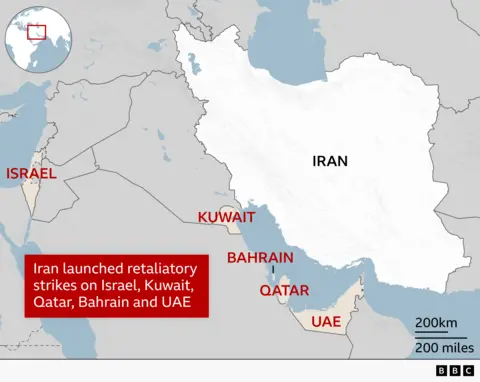
Iran responds by launching missiles and drones towards Israel and four Gulf Arab countries that host US military bases.Iran responds by launching missiles and drones towards Israel and four Gulf Arab countries that host US military bases.
What we know so far about the US-Israel attacks and Iran’s retaliation
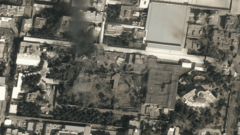
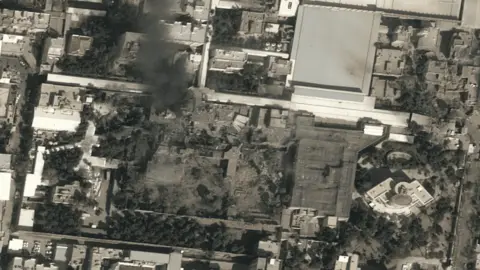 Airbus DS 2026
Iran’s Supreme Leader Ayatollah Ali Khamenei has been killed after Israel and the US launched a “massive” and ongoing attack against Iran’s leadership and military.
US President Donald Trump has urged Iranian forces to lay down their arms, and for Iran’s people to rise up against its government.
Iran has responded by firing ballistic missiles and drones at US assets and allies across the region, targeting Israel, Bahrain, Kuwait, Qatar, the United Arab Emirates and Jordan.
On Sunday, Israel said it had launched fresh attacks on “the heart of Tehran”, as Iranian attacks across the region also continued.
Here’s what we know.
Why have the US and Israel attacked Iran?
Trump has said the aim of the operation is to “ensure that Iran does not obtain a nuclear weapon”.
“We’re going to destroy their missiles and raze their missile industry to the ground. It will be totally again obliterated,” he said in an eight-minute video posted on Truth Social on Saturday morning.
He also warned Iran’s armed forces to lay down their weapons in return for “complete immunity”, or “face certain death”.
He then urged Iranian people to prepare to overthrow the clerical establishment: “When we are finished, take over your government. It will be yours to take. This will be probably your only chance for generations.”
The massive military operation – which the US has dubbed Operation Epic Fury – comes after weeks of threats from Trump that he would order military action if Iran did not agree to a new deal over its nuclear programme.
Iran has repeatedly said its nuclear activities are entirely peaceful.
The US military Central Command said they wanted to “dismantle the Iranian regime’s security apparatus, prioritising locations that posed an imminent threat”.
Earlier, Israeli Prime Minister Benjamin Netanyahu said Israel and the US had launched the “operation to remove the existential threat posed by the terrorist regime in Iran”.
What has been happening in Iran?
Explosions were reported in vast parts of the country on Saturday.
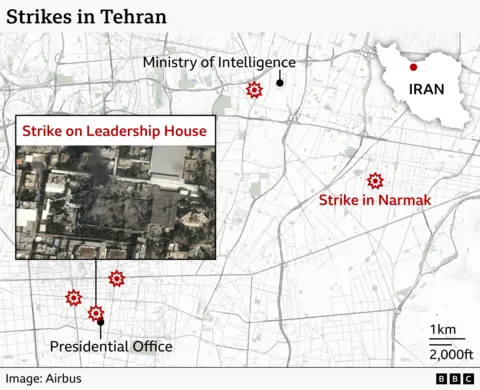
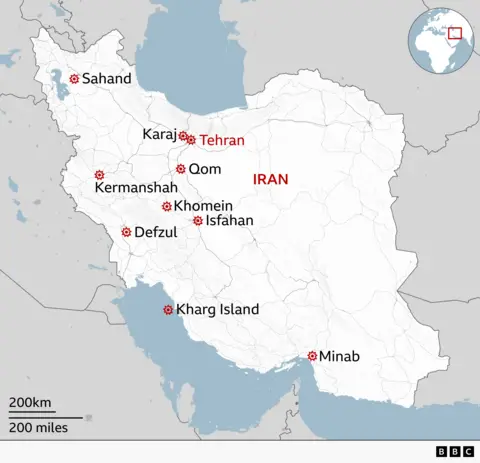
Videos circulating on social media show explosions and plumes of black smoke in multiple areas across the country, including the capital, Tehran, also Karaj, Isfahan and Qom in the centre of the country, and Kermanshah in the west.
Locations reportedly targeted include Islamic Revolution Guard Corps (IRGC) facilities, air defence capabilities, missile and drone launch sites, and military airfields.
The Israel Defense Forces (IDF) said about 200 fighter jets had taken part in an “extensive attack against the missile array and the defence systems” in western and central Iran.
On Saturday evening, Trump announced the death of Ayatollah Ali Khamenei and this was confirmed by Iran’s Supreme National Security Council in a statement broadcast by state media on Sunday morning.
Iran is also experiencing a near-total internet blackout, meaning getting reliable and up-to-date information out of the country is difficult.
Iran’s Civil Aviation Organisation has said its airspace is closed until further notice.
More than 200 people were killed and more than 700 injured across the country on Saturday, according to the Red Crescent. At least 153 people are now known to have died in an explosion at a school in southern Iran on Saturday, according to officials.
Meanwhile, around 40 Iranian officials were killed in the strikes, according to an intelligence source and a military source cited by CBS News, the BBC’s US partner.
The IDF has named seven senior Iranian defence officials as among those killed, including Iran’s Defence Council secretary Ali Shamkhani, Defence Minister Brig Gen Aziz Nasirzadeh and IRGC commander Gen Mohammad Pakpour.
Israel’s military said Saturday’s strikes had “paved the way to Tehran”, and Sunday’s attacks were focused on the central part of the city.
No figures have been given for casualties on Sunday within Iran, but Israel said command centres and military infrastructure had been destroyed.
Trump also said nine Iranian naval ships had been sunk and naval headquarters destroyed.
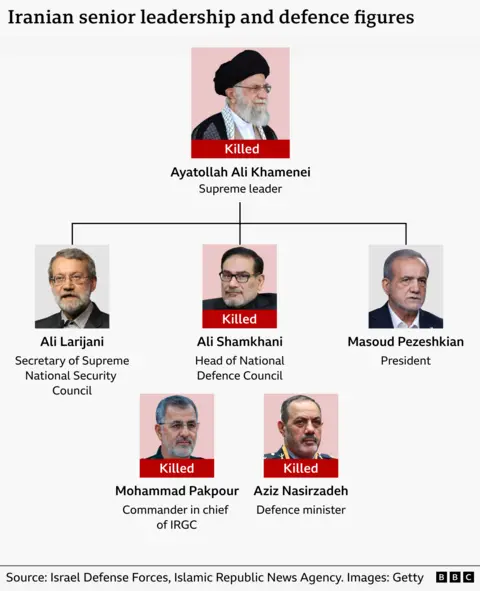
The IRGC has since named a new commander in chief, Ahmad Vahidi.
How has Iran responded?
Iran’s Foreign Minister Abbas Araghchi accused Israel and the US of launching a war that was “wholly unprovoked, illegal, and illegitimate”.
“Our powerful armed forces are prepared for this day and will teach the aggressors the lesson they deserve,” he wrote on X.
Iran has used ballistic missiles and drones to launch wide-scale attacks on US allies and assets across the Gulf, after its supreme leader was killed.
Numerous attacks were made on Israel, with one destroying a synagogue in the city of Beit Shemesh and killing at least nine people. Another 450 people have been injured in the attacks.
Qatar, Bahrain, Jordan and Kuwait – all home to US military bases – said they had intercepted missiles fired towards them, but falling debris appeared to have caused widespread damage. Oman and Saudi Arabia were also targeted.
A drone strike at the US naval base in Bahrain on Sunday sparked a major fire, according to one official.
Three people were killed in the United Arab Emirates as ports and airports were targeted, and one died in Kuwait.
Three US service members have died in combat, and five others have been seriously injured, the Pentagon said.
But Centcom said that its forces had “successfully defended against hundreds of Iranian missile and drone attacks”.
The EU naval mission in the region, EUNAVFOR ASPIDES, said on Saturday that the IRGC had sent radio messages to vessels warning that “no ship is allowed to pass the Strait of Hormuz” in the Gulf, through which about 20% of global oil and gas shipments pass.
The mission will bolster its presence in the Red Sea, Gulf, and Indian Ocean with additional ships, the EU’s foreign policy chief Kaja Kallas said on Sunday.
Iran later said that three oil tankers had been hit by missiles and were burning.
How might Khamenei’s successor be chosen?
On Sunday, Alireza Arafi was named interim supreme leader.
The formal selection of a new Supreme Leader does not happen by direct vote but by a body of 88 senior clerics known as the Assembly of Experts.
They are elected by direct vote every eight years.
Under the Iranian Constitution, these clerics must select the new Supreme Leader as soon as possible, but this may prove difficult for safety reasons while the country is under attack.
Is it safe to travel to the region?
Thousands of flights have been grounded to and from the region, in one of the most serious disruptions to global travel since the Covid-19 pandemic.
Wizz Air has suspended flights until 7 March in Israel, Dubai and Abu Dhabi in the UAE, Amman in Jordan, and in Saudi Arabia until Tuesday.
British Airways has cancelled flights to Tel Aviv and Bahrain until Wednesday.
In a statement, Swiss International Air Lines said: “Swiss and the Lufthansa Group airlines will suspend flights to Tel Aviv, Beirut [in Lebanon], Amman, Erbil [in Iraq], and Tehran until 7 March.”
Kuwait’s aviation authority said it was halting all flights to Iran until further notice, according to state media.
Emirates has temporarily suspended its operations to and from Dubai. Lufthansa, Air India, Virgin Atlantic and Turkish Airlines have also announced cancellations.
Some countries in the region – including Iraq and Jordan – have also closed their airspace. The UAE said it has “partially and temporarily” closed its airspace as a precaution, state media reported.
With additional reporting by Robert Greenall and BBC Persian.
BBC News World
Israel-Iran Conflict: Iran War Live Updates: Hegseth Vows to Reopen Key Strait as U.S. Measures Fail to Calm Oil Market
BBC News World
‘A Lot of Life Years Lost’: How NAFTA Shortened American Life Spans
BBC News World
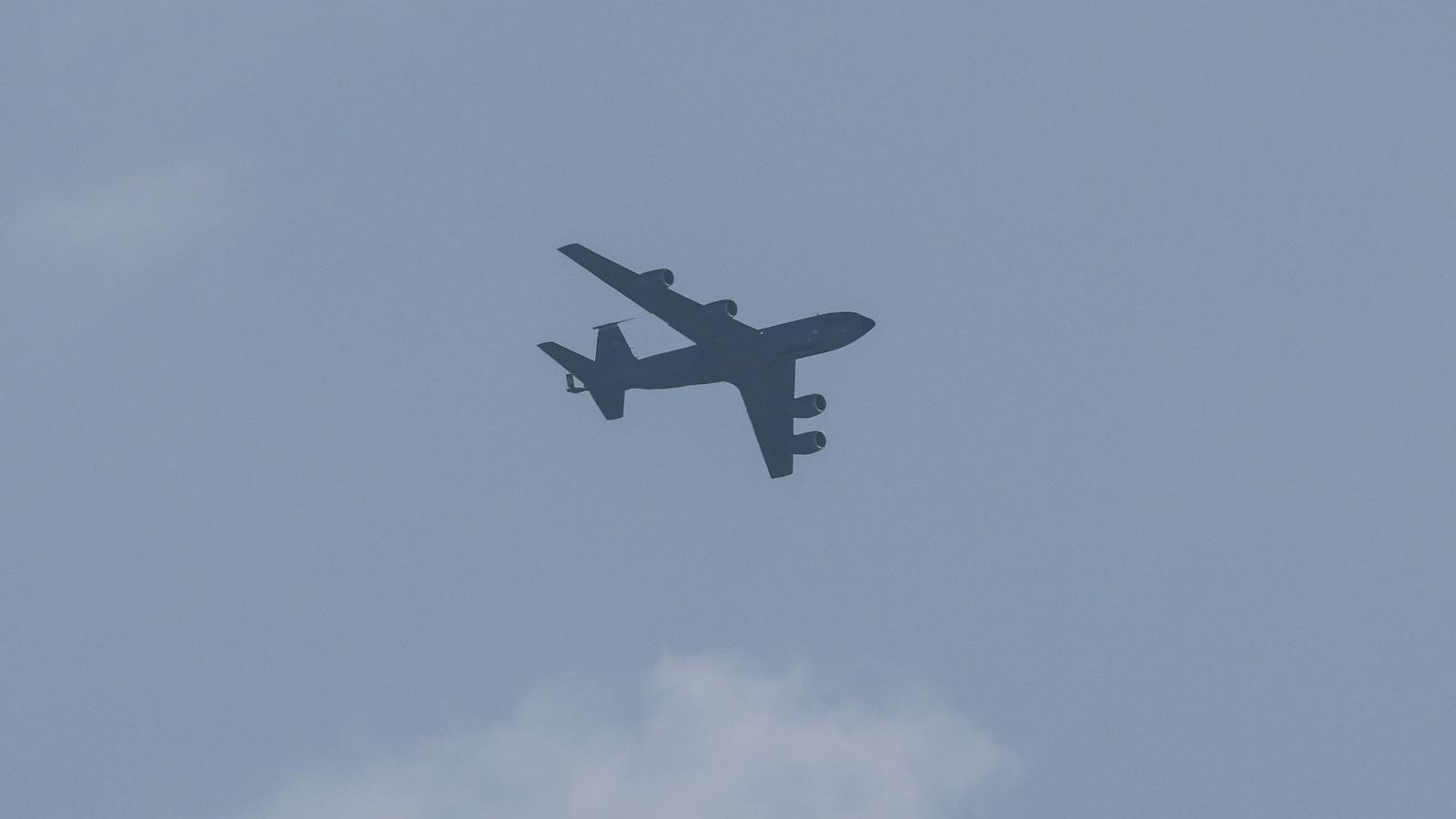
6 dead after KC-135 US refueling aircraft goes down in western Iraq
BBC News World
WATCH: Golden retriever trio shines bright at sunset

BBC News World
Hegseth Vows Lethal Day in Iran as Air War Intensifies
HistoriCity | Hormuz and its Nakhuda Connection with India
The earliest Indian reference to Old Hormuz and its trade with India appears in a 13th-century Sanskrit work from Gujarat


Ladakh protest: Climate activist Sonam Wangchuk to be released as govt revokes NSA detention
Climate activist Sonam Wangchuk’s detention under the National Security Act has been revoked by the Centre with immediate effect. Wangchuk...
Nine-judge SC bench to hear arguments on Mar 17 on definition of ‘industry’
Nine-judge SC bench to hear arguments on Mar 17 on definition of ‘industry’
LPG crisis: Check city-wise cooking gas prices as supply concerns take over India
While the government has assured that there is no shortage, people across the countries are panic buying and queuing up...
Surrendered not due to fear of death, but to work for people in legal framework. Maoist Devuji
Surrendered not due to fear of death, but to work for people in legal framework. Maoist Devuji
NCERT controversy exposes gaps in text-book approval process
The preparation of the new textbooks in line with the National Curriculum Framework- School Education (NCF-SE) 2023 follows a three-stage...
Iran arranges charter plane to repatriate crew of warship Iris Lavan docked in Kochi
The special charter flight is also carrying the bodies of Iranian sailors who were killed when IRIS Dena was attacked...
Tribal man forced into labour without pay for 3 decades in K’taka, 1 held
Police in Udupi district have arrested a woman accused of forcing a member of a Scheduled Tribe community to work...
IIT Gandhinagar cuts ties with prof amid NCERT textbook row
IIT Gandhinagar on Friday discontinued its association with its guest professor Michel Danino, two days after the SC ordered to...
IIT Gandhinagar cuts ties with prof amid NCERT textbook row
IIT Gandhinagar on Friday discontinued its association with its guest professor Michel Danino, two days after the SC ordered to...
-
 UsaLocalNews2 weeks ago
More than 100,000 Britons register for help in Middle East
-
Politics2 weeks ago
Are you James Bong? Supreme Court slams Rajasthan police
-

 UsaLocalNews2 weeks ago
England ‘given reassurances’ over safety in Turkey
-
Politics1 week ago
Contact lost at 7:42pm, ‘loud explosion’ heard: What happened to Sukhoi-30 jet that crashed?
-

 Sports2 weeks ago
Brazil World Cup is in Wales’ sights – James
-
 UsaLocalNews2 weeks ago
Oil Prices Surge After Iran Attack
-

 Sports2 weeks ago
Captain Semenyo and go big in defence – FPL team of week
-
 UsaLocalNews2 weeks ago
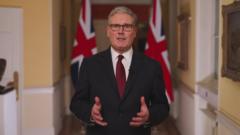
UK will allow US to use bases to strike Iranian missile sites, PM says