
Connect with us

HealthNews

Louisiana’s Reporting Law Chills Immigrant Medicaid Applications

​Yolibeth’s 4-year-old daughter scrambled headfirst onto a cushy leather love seat at their home near New Orleans and pushed a hairbrush into the hands of Miriam Romero, a health coordinator who works with the family. Romero placed the girl in her lap and started brushing her dark hair.

Yolibeth, a 38-year-old single mother who moved to South Louisiana from Honduras 15 years ago, watched them, smiling. The daughter is the youngest of five children living in this mixed-status household. Yolibeth and her two oldest kids don’t have legal immigration status, but the other three — ages 4, 9, and 13 — were born in the U.S. and are citizens.

All of her U.S.-born kids were enrolled in Medicaid at birth, which made it affordable for her to take them to the doctor for regular checkups when they were little. Her oldest two, ages 15 and 17, have never had health insurance, so Yolibeth relies on low-cost community clinics when she can afford it.

But now she worries that healthcare access for all of her children is slipping away. Yolibeth has been waiting for months to hear whether any of her children’s Medicaid renewal applications  has been approved. She fears they will be denied because of a new Louisiana law targeting noncitizen Medicaid enrollees, even though she isn’t applying for herself. She worries particularly about her 4-year-old’s access to routine care and required childhood vaccines.

“ I cannot access the same services, and so my child is not getting what she needs to grow healthy,” Yolibeth said in Spanish as her daughter giggled on the love seat.

Verite News and KFF Health News agreed to not use Yolibeth’s full name, because she is worried about repercussions related to her immigration status.

Romero (left) welcomes a community member to Familias Unidas en Acción’s office in New Orleans in April. (Christiana Botic/Verite News and CatchLight Local/Report for America)

Romero, who works for a local immigrant advocacy group, Familias Unidas en Acción, said that in a single week she received calls from eight immigrant families who had been denied after applying for Medicaid on behalf of children who are citizens.

“Because of the law that passed in Louisiana, children are losing their Medicaid every day,” Romero said in Spanish. “The more time that goes by, the more children are impacted by it.”

Romero said that all children from mixed-status families are likely to be denied Medicaid by the end of the year.

Missing Out on Care

Nationally, many immigrants said they skipped or delayed healthcare last year, citing issues including costs, struggles finding services, and fears about their or a family member’s immigration status, according to polling by KFF and The New York Times. Immigrants without legal status were the most likely to skip or delay care for themselves or their children. An increasing number of immigrants avoided applying for programs like Medicaid, too scared to risk dra  

Continue Reading
Click to comment

Leave a Reply

Your email address will not be published. Required fields are marked *

HealthNews

RFK Jr. Seeks To Peek at Americans’ Medical Records for Clues on Autism and Vaccines
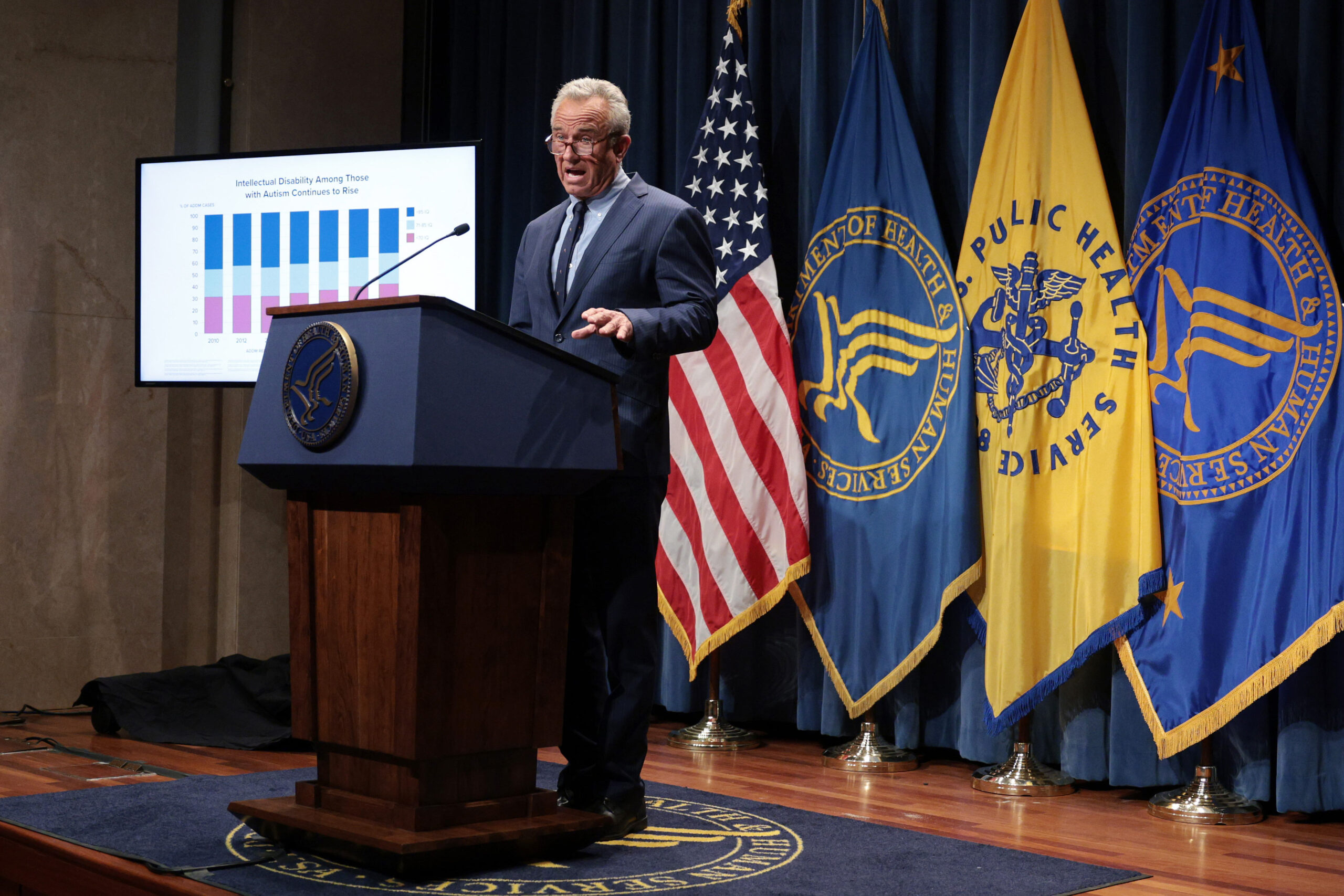
​U.S. health secretary Robert F. Kennedy Jr. is pursuing federal government access to most Americans’ medical records, in a quest to research a link between vaccines and autism — a connection the medical establishment studied for decades and flatly rejects.

The Department of Health and Human Services is seeking data from little-known state systems that allow hospitals and clinics to exchange detailed, identifiable patient information, KFF Health News has learned.

In private meetings, some public health leaders have objected to giving Kennedy’s team access to such data, raising doubts that it’s legal or that the information would even be useful.

They have also expressed concerns about allowing the federal government to peer into the minutiae of Americans’ medical records, which could mean viewing anything from doctors’ notes to prescription history. HHS has offered no insight into how it will protect or handle the personal health information it obtains.

But Kennedy told KFF Health News that medical records are key to investigating the cause of autism, vaccine safety, and chronic diseases. And millions of dollars in grant money has poured into a Nebraska nonprofit that has assisted Kennedy’s effort, according to state records.

He and his advisers have been frustrated that federal access to Americans’ medical records has been limited.

“We need a good health record system, and one of the things that really surprised me most when I came into office is that there is — that the systems are broken,” Kennedy said in a May interview. “We’ve had to go to the states and, luckily, we’ve got a lot of cooperation from the states, but we now have databases together that we can actually do the studies on. Those studies are in motion.”

HHS has not publicly announced any new projects involving medical records and autism or vaccine research. Kennedy faced blowback last year when he proposed compiling the medical records of people with autism to create a federal disease registry — which health department officials later disputed was underway.

But Kennedy said in May, “We have a whole pipeline of studies that will be done over the next year.”

Though the White House has steered Kennedy away from further changes to U.S. vaccine policy ahead of November’s crucial midterm elections, President Donald Trump has regularly echoed Kennedy’s doubts about vaccine safety and last week signed an executive order calling for the U.S. to reduce the number of vaccines recommended for children.

Kennedy’s political appointees and allies — including William “Reyn” Archer III, a former Texas health official and vaccine critic whom Kennedy hired as a senior adviser — have led the initiative for the health department to collect and examine medical records.

William “Reyn” Archer III, a former Texas health commissioner, attends the Advisory Committee on Immunization Practices meeting at Centers for Disease C  

Continue Reading

HealthNews

Michigan Found a Way To Reduce School Vaccine Waivers. Until It Backfired.
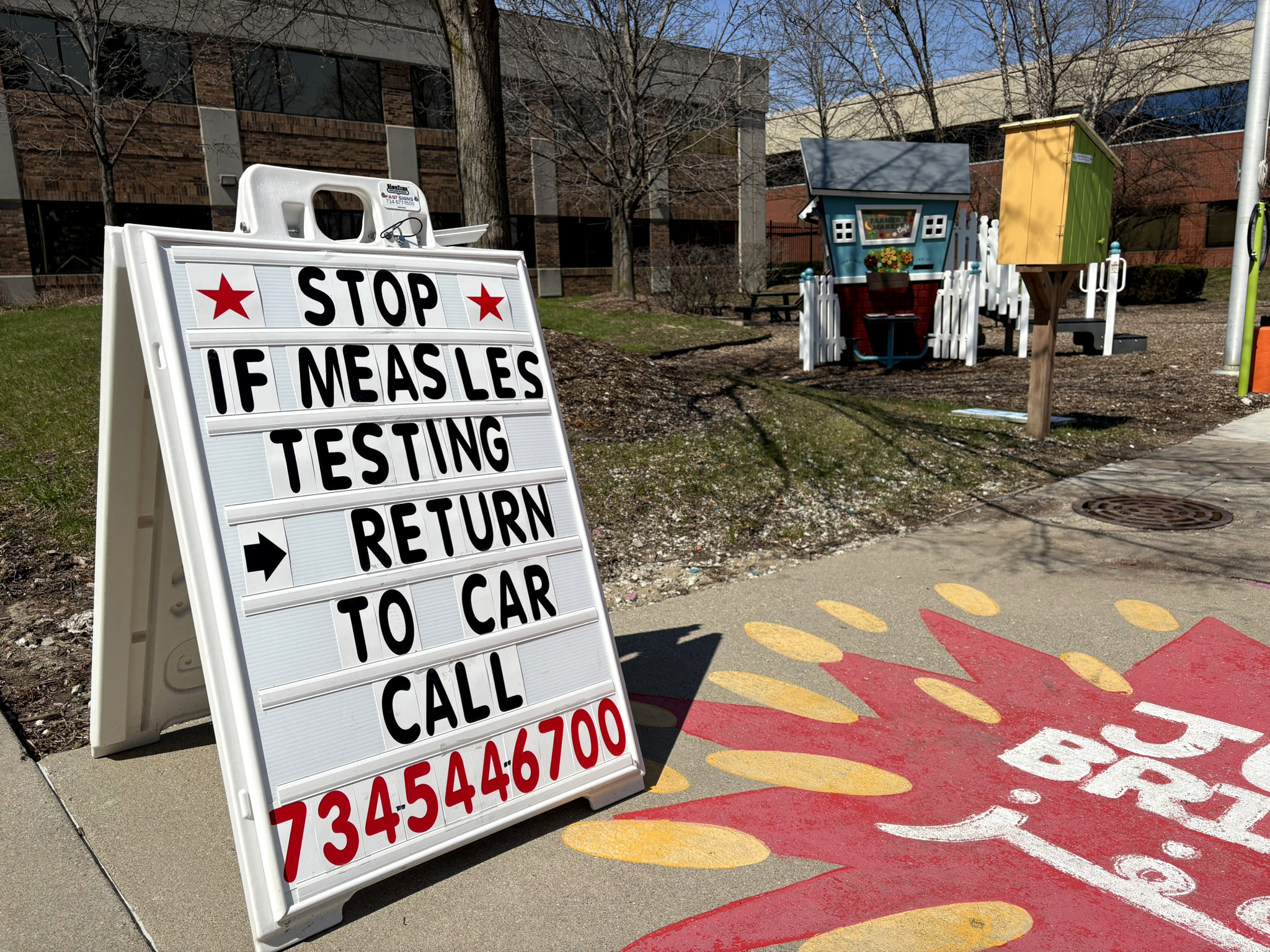
​PORT HURON, Mich. — State health officials urged parents in several counties to vaccinate babies against measles ahead of schedule this spring as cases multiplied in Michigan. The outbreaks of the highly contagious virus — which can lead to brain swelling, deafness, and death — came as parents are opting school-age kids out of vaccinations at a record-high rate.

It’s a situation state officials have spent more than a decade trying to avoid. For years, they’ve been trying to make it harder for parents to send their kids to school unvaccinated.

But those efforts have backfired in places like St. Clair County, in Michigan’s conservative Thumb region. Remington Nevin, the county’s medical director, has declared “a new era of vaccine choice.” Local parents there can now bypass the usual protocols and get school vaccine waivers via email, days after they fill out a brief digital form.

State health officials aren’t fighting it.

Remington Nevin is the medical director for the St. Clair County Health Department in Michigan. The county is the first in the state to make vaccine waivers available to parents entirely online. Parents who have “felt pressured” into getting vaccines “are going to experience a new era of vaccine choice in St. Clair County,” Nevin said at a January board meeting. (Kate Wells/KFF Health News)

In fact, Michigan’s health agency has been helping more than 30 counties move away from a state policy once credited with sharply reducing the number of parents who opted their kids out of shots.

In 2015, the state started requiring parents seeking waivers to first attend a vaccine education session, in person, at their local health department.

But in the post-covid era, local health officials say, the sessions became hostile, ineffective, and sometimes even unsafe for staff. One high school called police last fall over an escalating dispute with parents who refused to obtain a state-recognized waiver for their children, with a sheriff’s deputy warning the parents that they could face criminal charges.

In response, the state has helped create a hybrid waiver process for dozens of counties, allowing parents to take a brief vaccine education course online while still requiring they get their waivers signed in person. It’s part of a broader shift in strategy in a state that had some of the most polarizing and politically divisive covid restrictions.

At Michigan schools where only 30% to 40% of students are now vaccinated, it is “simply not possible to keep diseases like measles at bay,” said Natasha Bagdasarian, the state’s chief medical officer. “And when one of these measles cases ends up in a low-immunization community, that’s when the ember really has a chance to expand and become a wildfire.”

A Short-Lived Success Story

In 2014, Michigan had the fourth-highest vaccine waiver rate in the country.

Health officials suspected some parents were just signing waivers   

Continue Reading

HealthNews

Amid Ebola, Hantavirus Outbreaks, Democrats Decry Trump’s Health Cuts

​The Trump administration’s deep cuts to federal health agencies have become a political liability after a deadly outbreak of hantavirus aboard a cruise ship and the spread of an even more fearsome disease, Ebola, in Africa.

At least that’s the way many Democrats see it.

They have seized on the situation to charge that the U.S. is ill prepared to respond to outbreaks — let alone a pandemic — after President Donald Trump slashed jobs and funding for public health infrastructure and pandemic preparedness. Infectious disease specialists have called on the White House to reverse cuts and rejoin the World Health Organization.

The White House, meanwhile, is on the defensive, trying to reassure a pandemic-weary public that the federal government can still mount effective responses to infectious disease outbreaks.

The FDA and the Centers for Disease Control and Prevention underwent massive layoffs as part of an effort led by billionaire businessman Elon Musk and the Department of Government Efficiency, or DOGE, that also resulted in the cancellation of billions of dollars in federal contracts and grants.

“These outbreaks are unfolding at a time when the U.S. public health infrastructure is under significant strain,” said Leana Wen, an emergency medicine physician and former Baltimore health commissioner. “The CDC currently lacks a director, the FDA lacks a director, there is no surgeon general, and many leaders with outbreak response management experience have left the federal government.”

The U.S. government has ordered quarantines and is monitoring potential exposures to hantavirus after an outbreak on a cruise ship. It is also implementing new restrictions for foreign travelers amid an Ebola outbreak in Uganda and the Democratic Republic of Congo that has grown to more than 1,000 suspected cases. While neither situation is seen as likely to become a global pandemic, Democrats and infectious disease leaders have seized on the outbreaks to criticize the effects of the DOGE cuts and other administration public health policies.

The hantavirus cluster occurred on the MV Hondius, an expedition ship that left Argentina on April 1 for a monthlong sojourn with almost 150 people aboard. The earliest cases, including two deaths, were reported to the WHO on May 2. Three of 11 infected passengers have died. Hantavirus is typically spread to people from rodents, but this version, known as the Andes virus, can be passed person to person.

The Ebola outbreak has captured public attention, though no cases have been confirmed in the U.S. The virus — a rare strain called Bundibugyo, against which there are no proven vaccines or treatments — spread undetected for weeks, prompting WHO Director-General Tedros Adhanom Ghebreyesus to say he’s concerned about the “scale and speed” of the outbreak. Seven Americans, including a doctor exposed to the virus, were evacuated to Germany by the U.S. State Department.

Democra  

Continue Reading

HealthNews

Gounder Gives Lowdown on Ebola, Peptides, and Colorectal Screenings

​Céline Gounder, KFF Health News’ editor-at-large for public health, discussed recent warnings about research-grade peptides and new colorectal cancer screening guidelines on CBS News’ CBS Mornings on May 27. She also discussed the Ebola outbreak centered on the Democratic Republic of Congo and whether it’s expected to spread on May 26.

Click here to watch Gounder discuss research-grade peptides on CBS Mornings.

Click here to watch Gounder discuss colorectal cancer screening on CBS Mornings.

Click here to watch Gounder discuss the Ebola outbreak on CBS Mornings.

KFF Health News is a national newsroom that produces in-depth journalism about health issues and is one of the core operating programs at KFF—an independent source of health policy research, polling, and journalism. Learn more about KFF.This <a target=”_blank” href=”https://kffhealthnews.org/on-air/on-air-may-30-2026-celine-gounder-peptides-colorectal-cancer-ebola/”>article</a&gt; first appeared on <a target=”_blank” href=”https://kffhealthnews.org”>KFF Health News</a> and is republished here under a <a target=”_blank” href=”https://creativecommons.org/licenses/by-nc-nd/4.0/”>Creative Commons Attribution-NonCommercial-NoDerivatives 4.0 International License</a>.<img src=”https://kffhealthnews.org/wp-content/uploads/sites/8/2023/04/kffhealthnews-icon.png?w=150&quot; style=”width:1em;height:1em;margin-left:10px;”>
<img id=”republication-tracker-tool-source” src=”https://kffhealthnews.org/?republication-pixel=true&post=2244153&amp;ga4=G-J74WWTKFM0&quot; style=”width:1px;height:1px;”>  

Continue Reading

HealthNews

More Kids Without Coverage
​The Host

Julie Rovner

KFF Health News

@jrovner

@julierovner.bsky.social

Read Julie’s stories.

Julie Rovner is chief Washington correspondent and host of KFF Health News’ weekly health policy news podcast, “What the Health?” A noted expert on health policy issues, Julie is the author of the critically praised reference book “Health Care Politics and Policy A to Z,” now in its third edition.

The One Big Beautiful Bill Act, passed by congressional Republicans in 2025, was supposed to backload cuts to health programs so they wouldn’t take effect until after the 2026 midterm elections. That’s not how things are working out, with numerous analyses showing insurance coverage is already starting to drop.

Meanwhile, the Trump administration claims that the coverage reductions prove its anti-fraud efforts are working. But those efforts are likely to affect far more people than just those who commit fraud against federal health programs.

This week’s panelists are Julie Rovner of KFF Health News, Maya Goldman of Axios, Shefali Luthra of The 19th, and Lauren Weber of The Washington Post.

Panelists

Maya Goldman

Axios

@mayagoldman_

@maya-goldman.bsky.social

Read Maya’s stories.

Shefali Luthra

The 19th

@shefali.bsky.social

Read Shefali’s stories.

Lauren Weber

The Washington Post

@LaurenWeberHP

@laurenweberhp.bsky.social

Read Lauren’s stories.

Among the takeaways from this week’s episode:

Amid a recent decline in the number of Americans with health insurance, one affected group in particular stands out: children. Many kids are falling off the Medicaid rolls, largely because of the chilling effects of the Trump administration’s immigration crackdown and broader confusion about eligibility requirements.

Meanwhile, the high cost of health insurance is pressing people to seek alternatives, many of which offer few or no protections against large medical bills. On the campaign trail, high-profile Democrats are sounding the alarm about a problematic health ecosystem, even framing issues such as reproductive health in terms of affordability.

The Trump administration is raising eyebrows with its response to the emerging Ebola crisis as it works to keep American citizens exposed to the disease out of the country entirely. Countering previous government approaches, which prioritized not only public safety but also offering the best care available to Americans, this approach also stands in stark contrast with President Donald Trump’s d  

Continue Reading

Latest News

Politics40 minutes ago

‘No Bhagwan songs, don’t go to temple’: Woman says she was shown Pakistani preacher’s videos in TCS Nashik case

 The woman alleged that a married man sexually exploited her on the promise of marriage while encouraging her to move...

Politics2 hours ago

‘India will resist such efforts’: Putin backs New Delhi amid ‘US pressure’ over Russian oil

 Vladimir Putin’s remarks come at a time when the US is reconsidering a waiver that has allowed countries, including India,...

Fashion3 hours ago

Antique temple jewellery I’d wear as a bride—and a Vogue editor

​A comprehensive guide to a South Indian jewellery edit  

Politics3 hours ago

Muddy site, worker’s legs crushed, 3 bodies: What we know about the Faridabad crane collapse

 The crane came crashing down onto a shipping container being used as a temporary site office and resting area for...

Sports3 hours ago

Dez Bryant takes shots at Knicks while dropping bold take on Cowboys’ chances at Super Bowl glory

​Dez Bryant and the New York Knicks come from different athletic arenas, but some rivalries transcend sports boundaries.  

Sports3 hours ago

All new game modes in Black Ops 7 Season 4 

​Black Ops 7 Season 4 is out, and its arrival introduces several new game modes to the multiplayer playlist. Launched...

Sports3 hours ago

Joe Gibbs Racing’s pit road dominance could prove decisive in the championship battle

​Joe Gibbs Racing (JGR) has established itself as one of the strongest teams in the 2026 NASCAR Cup Series season.  

Sports3 hours ago

How to play Clash in Warzone Season 4

​Warzone Season 4 is bringing back the chaotic warfare-esque Clash game mode as a limited-time event.  

Sports3 hours ago

007 First Light Operations Walkthrough: The Garden Party

​The Garden Party is an Operation in 007 First Light. This is a simulation in which Bond has to locate...

Sports3 hours ago

Dale Earnhardt Jr. downplays Tyler Reddick’s NASCAR title chance, favors rival team: “Not sure that they’re the best team”

​NASCAR Hall of Famer Dale Earnhardt Jr. recently poured some cold water on the narrative that regular-season points leader Tyler...

Trending News

Join Our Newsletter

Stay updated with breaking news and exclusive content.