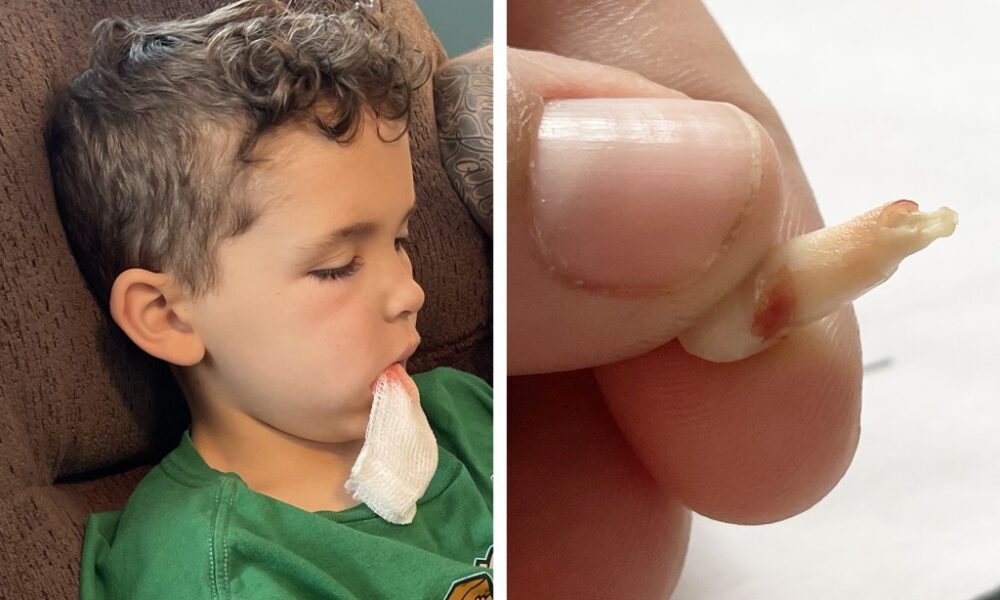
Eight-year-old Jonah woke up one May morning with a swollen face and a toothache. He refused the pain medication that his mom, Geneva Reynolds, tried to give him. He didn’t sleep or eat and cried constantly.
Within a few days, Reynolds became so desperate that she and her husband had to physically restrain Jonah, dumping pain medication down his throat as he screamed in pain.
“It broke our hearts,” said Reynolds, who lived in Georgetown, Kentucky, at the time. “And I remember just thinking that it shouldn’t have to come to that.”
Reynolds couldn’t find a dentist with an opening who could treat Jonah, who is autistic and often resists dental exams due to hypersensitivity and anxiety. Over the course of five days, Reynolds took Jonah twice to a nearby emergency room as he struggled with persistent pain and a fever due to a likely infected tooth with an exposed nerve. The ER had no dentists; both times, the family was sent home with only pain medication and an ice pack.
Across the nation, more children are entering ERs for preventable tooth problems. Dentists, hygienists, and researchers attributed that trend to a shortage of pediatric dental care professionals in rural areas and worsening oral hygiene since the covid-19 pandemic. Tens of thousands of kids end up in the hospital for dental emergencies each year, according to Melissa Burroughs, senior director of policy and advocacy at the national health nonprofit CareQuest Institute for Oral Health.
ER visits for tooth problems unrelated to physical injuries rose almost 60% nationally for children under 15 years old from 2019 to 2022, according to a report released late last year by CareQuest. And local data reflects that national trend: At Children’s Hospital Colorado in the Denver area, nontraumatic dental cases, such as cavities or gum infections, in its ER increased 175% from 2010 to 2025, according to hospital spokesperson Sarah Bonar. In Kentucky, where Jonah lives, children’s visits to the ER for dental problems rose 72% from 2020 to 2024, according to the state.
Policy changes under the Trump administration are poised to worsen the trend. President Donald Trump’s 2025 federal budget reconciliation law, known as the One Big Beautiful Bill Act, called for billions in cuts from Medicaid, which may force states to limit or drop dental coverage from the public insurance program for those with low incomes or disabilities. New eligibility requirements for Medicaid in some states could affect kids’ access to dental care, even though children are guaranteed dental coverage under the program. Research shows that when parents lose Medicaid, even kids with coverage are more likely to have untreated cavities and less likely to go to a dentist.
The Trump administration has also promoted skepticism about fluoride. Decades of research show that fluoride in drinking water and topical fluoride treatments dramatically reduce tooth decay and prevent caviti