
BBC News World
What we know after latest escalation in Pakistan-Afghanistan tensions

Bombings by Pakistan are the most significant development in tensions between the two neighbours – though the physical impact remains unclear.Bombings by Pakistan are the most significant development in tensions between the two neighbours – though the physical impact remains unclear.
What we know after latest escalation in Pakistan-Afghanistan tensions
 Reuters
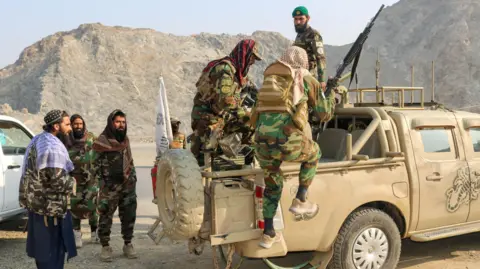
Pakistan has bombed areas in Afghanistan on Friday, after the Afghan Taliban earlier announced a major offensive against Pakistani military posts near the border.
It is the latest escalation of tensions between the neighbouring countries.
Afghanistan’s Taliban government said it had launched an offensive on Pakistani military bases near the border on Thursday night.
Pakistan responded within hours, bombing targets in the Afghan capital, Kabul, and the provinces of Kandahar and Paktika – Afghan provinces close to its 2,600 km (1,615 miles) border.
Details are still emerging and the BBC has yet to confirm whether there are casualties on either side.
The bombings are the most significant development in the ongoing tensions between the two countries, which had agreed to a ceasefire last October following a week of deadly clashes.
Here is what we know so far.
What happened overnight?
The first reports began to surface on Thursday, 26 February.
An offensive was launched at 20:00 local time (15:30 GMT) along the border in the provinces of Nangarhar, Nuristan, Kunar, Khost, Paktia and Paktika, according to statements from Taliban officials.
Pakistan quickly retaliated, saying the Taliban had “miscalculated and opened unprovoked fire on multiple locations” across the border in its north-western province of Khyber Pakhtunkhwa, which had been met with an “immediate and effective response” by Islamabad’s security forces.
It then launched a series of bombing raids on Afghanistan in the early hours of Friday morning, striking targets in Kabul and in border provinces.
Further outbreaks of violence were reported near the key Torkham border crossing, which sits between Peshawar and Jalalabad, by AFP journalists at the scene.
Zabihullah Mujahid, the Afghan Taliban spokesman, published – then subsequently deleted – a post on X that the group had launched strikes early on Friday on Pakistani military positions in Kandahar and Helmand, two provinces in Afghanistan.
The Afghan Taliban has said it carried out air strikes on several targets within Pakistan on Friday morning. Sources in the Taliban government told the BBC these were with drones launched from Afghanistan.
A Pakistani military officer confirmed that Afghan Taliban drones targeted three locations – the army’s artillery school in Nowshehra, one near a military academy in Abbottabad, and one that fell near a primary school in Swabi – but said all were destroyed.
These attacks are still unprecedented. Taliban fighters are thought to rely predominantly on commercially available drones carrying improvised explosives, making their range and targeting capabilities limited.
The BBC has not yet managed to verify all the claims.
What are the countries saying?
As with previous rounds of hostilities between Pakistani and Afghan forces, each side has accused the other of attacking first – and both claim to have inflicted heavy losses on the other side.
Pakistan’s Prime Minister Shehbaz Sharif said his country’s forces were able to “crush” its foes, while its defence minister had declared “open war” on the Taliban in Afghanistan.
The Afghan Taliban “will retaliate if we are attacked, but we won’t start clashes at the moment”, a Taliban military spokesperson told the BBC.
The group’s chief spokesman Zabihullah Mujahid said the offensive had killed “numerous” Pakistani soldiers and captured others – a claim denied by Pakistani authorities.
Mosharraf Zaidi, spokesman for Pakistan’s prime minister, said 133 Afghan Taliban fighters had been killed and more than 200 wounded by Pakistani forces as of 22:50 GMT on Thursday. Again, the BBC has not been able to verify these figures.
UN officials have called for an immediate de-escalation of the fighting, while Iran, which shares borders with both nations, has offered to mediate.
Iranian Foreign Minister Abbas Araqchi noted it was currently Ramadan, “the month of self-restraint and strengthening of solidarity in the Islamic world”.
China, which counts itself as friendly to both Afghanistan and Pakistan, called for a ceasefire, with foreign ministry spokeswoman Mao Ning urging them to “remain calm and exercise restraint”.
The foreign minister of Pakistan’s ally Saudi Arabia met his Pakistani counterpart to discuss ways to reduce tensions.
Why is this happening?
The air strikes follow months of hostilities between the two countries. The last serious flare-up was in October, after which a fragile ceasefire brokered by Turkey and Qatar was reached.
Pakistan accuses Afghanistan’s Taliban government of supporting “anti-Pakistan terrorists” who it blames for carrying out suicide attacks in Pakistan, including a recent one at a mosque in Islamabad.
This is a claim disputed by the Taliban government, which has repeatedly said the territory of Afghanistan is not being used to threaten the security of other countries.
It, in turn, accuses Pakistan of carrying out unprovoked attacks in which civilians have been killed. Pakistan says it only targets militants.
Earlier this week, Pakistan carried out multiple overnight air strikes on Afghanistan, which the Taliban has said killed at least 18 people, including women and children.
Outgunned by nuclear-armed Pakistan, analysts believe that it is unlikely for the Taliban to fight a conventional war with Pakistan. However, the Afghan Taliban has extensive experience in guerrilla warfare.
What makes the latest round of Pakistani strikes significant is that they have targeted Taliban government facilities instead of terrorist targets in Afghanistan, Michael Kugelman, a senior fellow for South Asia at the Atlantic Council, told the BBC’s Newsday programme.
“It’s now targeting the regime itself,” he said.
Meanwhile, rhetoric from the Taliban suggests it is committed to “staging relentless attacks” on Pakistan – a “precarious situation” that could lead to an actual conflict.
The Afghan Taliban’s military chief, Qari Muhammad Fasihuddin, said in a video message on Friday that Pakistan could expect “an even more decisive response” in future.
Additional reporting by the BBC Afghan and Urdu teams
BBC News World
Israel-Iran Conflict: Iran War Live Updates: Hegseth Vows to Reopen Key Strait as U.S. Measures Fail to Calm Oil Market
BBC News World
‘A Lot of Life Years Lost’: How NAFTA Shortened American Life Spans

BBC News World
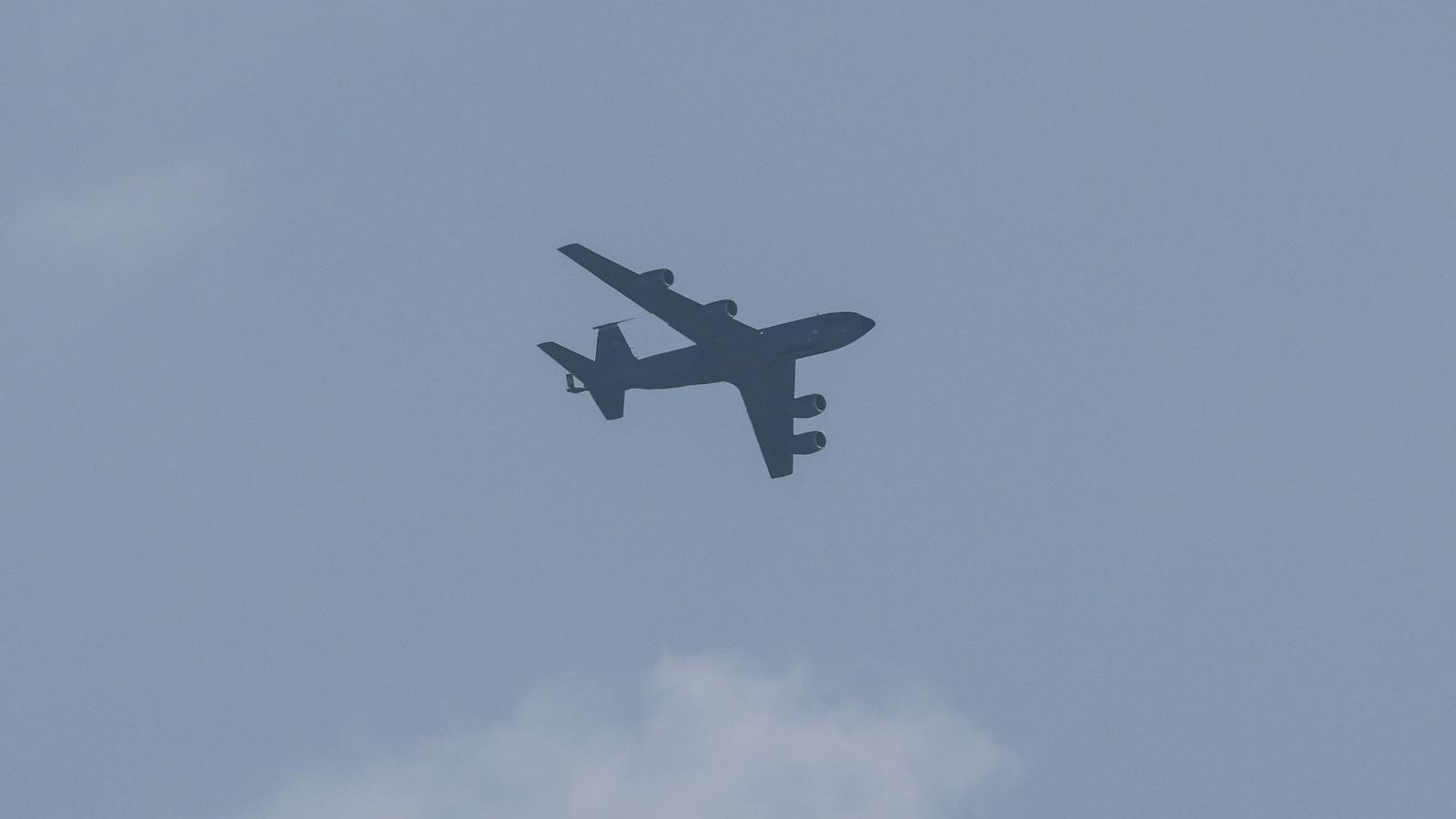
6 dead after KC-135 US refueling aircraft goes down in western Iraq
BBC News World
WATCH: Golden retriever trio shines bright at sunset

BBC News World
Hegseth Vows Lethal Day in Iran as Air War Intensifies

Bhopal ‘gangster’ groom arrested just before wedding; bride pleads with cops
The groom, leader of ‘illegal’ gang, was held for kidnapping a priest and demanding ransom from his family.
Bhopal ‘gangster’ groom arrested just before wedding; bride pleads with cops
The groom, leader of ‘illegal’ gang, was held for kidnapping a priest and demanding ransom from his family.
HistoriCity | Hormuz and its Nakhuda Connection with India
The earliest Indian reference to Old Hormuz and its trade with India appears in a 13th-century Sanskrit work from Gujarat


Ladakh protest: Climate activist Sonam Wangchuk to be released as govt revokes NSA detention
Climate activist Sonam Wangchuk’s detention under the National Security Act has been revoked by the Centre with immediate effect. Wangchuk...
Nine-judge SC bench to hear arguments on Mar 17 on definition of ‘industry’
Nine-judge SC bench to hear arguments on Mar 17 on definition of ‘industry’
LPG crisis: Check city-wise cooking gas prices as supply concerns take over India
While the government has assured that there is no shortage, people across the countries are panic buying and queuing up...
Surrendered not due to fear of death, but to work for people in legal framework. Maoist Devuji
Surrendered not due to fear of death, but to work for people in legal framework. Maoist Devuji
NCERT controversy exposes gaps in text-book approval process
The preparation of the new textbooks in line with the National Curriculum Framework- School Education (NCF-SE) 2023 follows a three-stage...
Iran arranges charter plane to repatriate crew of warship Iris Lavan docked in Kochi
The special charter flight is also carrying the bodies of Iranian sailors who were killed when IRIS Dena was attacked...
Tribal man forced into labour without pay for 3 decades in K’taka, 1 held
Police in Udupi district have arrested a woman accused of forcing a member of a Scheduled Tribe community to work...
-

 UsaLocalNews2 weeks ago
More than 100,000 Britons register for help in Middle East
-
Politics2 weeks ago
Are you James Bong? Supreme Court slams Rajasthan police
-

 UsaLocalNews2 weeks ago
England ‘given reassurances’ over safety in Turkey
-
Politics1 week ago
Contact lost at 7:42pm, ‘loud explosion’ heard: What happened to Sukhoi-30 jet that crashed?
-

 Sports2 weeks ago
Brazil World Cup is in Wales’ sights – James
-
 UsaLocalNews2 weeks ago
Oil Prices Surge After Iran Attack
-

 Sports2 weeks ago
Captain Semenyo and go big in defence – FPL team of week
-

 UsaLocalNews2 weeks ago
UK will allow US to use bases to strike Iranian missile sites, PM says