
BBC News World
Why Trump means the Cuban Revolution faces its biggest threat yet

Will a worsening internal crisis create the conditions for the Cuban Revolution to unravel from within?Will a worsening internal crisis create the conditions for the Cuban Revolution to unravel from within?
Why Trump means the Cuban Revolution faces its biggest threat yet
 BBC
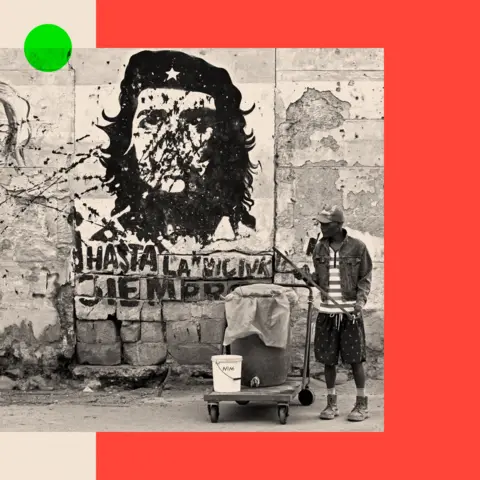
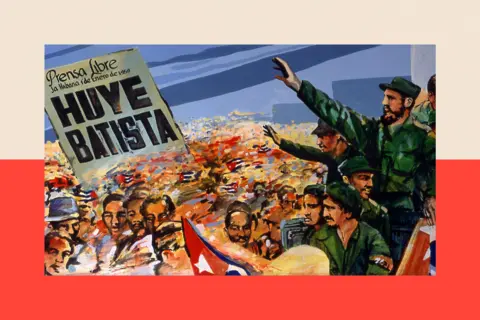
BBCA sizeable exhibit in the Museum of the Revolution in Havana is dedicated to conditions in Cuba before the revolution took power in 1959. Inside the ornate former presidential palace, photographs and oral testimony detail the grinding poverty and ingrained corruption of the dictatorship of Cuba’s then-military strongman, Fulgencio Batista.
The enduring image is of a woman in a dirt-floored palm-leaf hut cooking with firewood. Similar pictures appear in state museums across the island from the Bay of Pigs to Birán, the birthplace of the father of the Cuban Revolution, Fidel Castro. The inference is clear: the revolutionaries saved Cubans from the ignorance and hardship of life under a Washington-backed de facto leader and led them to dignity, education and true independence.
Yet today, Lisandra Botey identifies more with the impoverished woman in the photograph than with the revolutionaries who liberated her country from Batista.
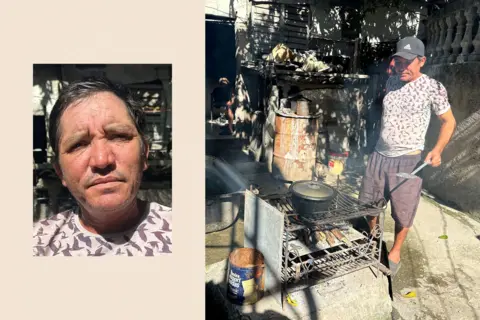
“We’re living like that now, we’re exactly like that”, says housewife Lisandra outside her home in Havana, which is cobbled together with pieces of sheet metal and wood.
“Every morning, we have to go down to the beach [in Havana] and look for firewood. Then we bring it home to cook breakfast with – because if we get power, it comes on during school hours.”
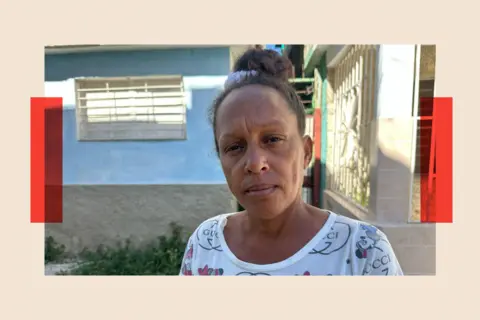
Lisandra’s nine-year-old daughter set off for school that morning with nothing in her stomach, she explains, tears pricking her eyes. Her husband, Brenei Hernández – a construction worker with next to no work – says they often have no idea where the next meal is coming from.
“Every day is the same hunger, the same misery”, he says, stirring a pot of white rice – so at the very least his daughter will come home from school to something hot to eat.
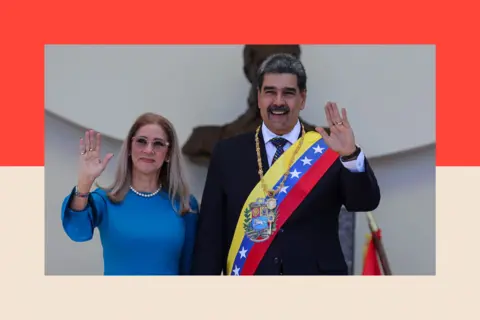
With the Cuban economy in freefall since the coronavirus pandemic, no gas has been delivered to Brenei’s flimsy home in a Havana suburb for months. He and his neighbours were already cooking with firewood and charcoal before US troops forcibly removed Cuba’s closest ally, the Venezuelan president, Nicolás Maduro, from power on 3 January. Since then, though, Washington has seemingly taken full control of Venezuela’s oil industry and the supply of crude to the communist-run island has dried up.
 Universal Images Group via Getty Images
The decades-long US economic embargo on Cuba has been ramped up like never before: US President Donald Trump has threatened tariffs on any nation which sends oil to the stricken island.
None of Cuba’s traditional allies – whether Mexico, Russia, China, Vietnam or Iran – have stepped up to fill the void left by Venezuela, although the US Treasury this week said it would relax restrictions on a limited number of oil sales, to “support the Cuban people for commercial and humanitarian use.”
The move comes amid rising tensions between Washington and Havana. Cuba’s government has reported that its border guards fatally shot four people travelling in a US‑registered speedboat. It said the individuals were Cuban nationals living in the United States.
US Secretary of State Marco Rubio said the US was investigating the “highly unusual” incident.
“Washington’s old playbook on Cuba doesn’t apply anymore and whoever hasn’t appreciated that yet is in for a shock,” says Cuban economist, Ricardo Torres. “Trump is changing the rules of the game.”
Trump has declared that “Cuba is ready to fall”, intensifying pressure on the island at its most vulnerable moment since the Cold War. Some commentators have said one of the aims of Washington’s removal of Maduro in Venezuela was to deepen Cuba’s economic crisis. It appears the Trump administration hopes to weaken the revolution – possibly terminally – and push for the collapse of state-run socialism on the island.
The underlying calculation is straightforward: that a worsening internal crisis could create the conditions for the Cuban Revolution to unravel from within. What remains far less certain is whether such a strategy will force regime change, or whether the communist-run Cuban government will, as it has in past crises, find new ways to endure.
Blackouts and ‘extreme rationing’
The effects of the fuel crisis are being felt the length and breadth of Cuba.
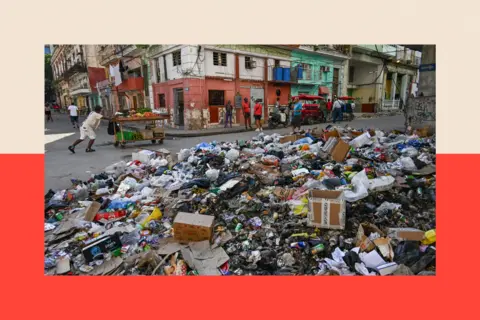
Blackouts in Havana can last for 15 hours a day or more. Hospitals are in darkness with only emergency cases being admitted. Schools are often shuttered. Rubbish is piled high on street corners with no fuel for the state’s garbage trucks to collect it. Scrawny and elderly residents can often be found sifting through the discarded waste.
For an island proud of the social safety net it built for its people since 1959 – universal healthcare, the eradication of illiteracy, tackling infant mortality rates and preventable diseases – the picture is bleak, and getting worse.
One constant question since Maduro’s arrest is: how long can Cuba hold on without new fuel supplies reaching the island?
“Perhaps the oil inventories could last for six to eight weeks,” suggests Ricardo Torres – but he admits it’s hard to know with any degree of precision. “Cuba doesn’t publish figures on fuel inventories.”
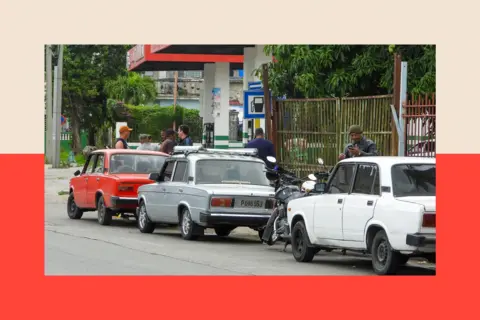
“Extreme rationing” could be introduced, he says, but draconian restrictions are already in place. People are limited to 20 litres of fuel at the petrol pumps, which must be paid for in US dollars.
They’re obliged to use a government-run app called Ticket. But the wait can last for days, even weeks. Drivers are finding more than 10,000 people ahead of them when they join the virtual queue for half a tank of petrol. Unsurprisingly in such circumstances, the price of black-market fuel has skyrocketed.
 AFP via Getty Images
Despite it all, Brenei Hernández doesn’t direct his ire at Washington. Quite the opposite, in fact: he blames the Cuban state.
“I’d like Trump to take this place over. Then let’s see if things get better,” he says with unerring honesty. “What can I tell you? I’m not going to lie,” he adds.
Regime change
Having spent years listening to Cubans repeat anodyne revolutionary slogans when asked for their opinions on camera, it’s disarming to hear such frank views expressed with no outward fear of the repercussions. Such is the level of disgust and exhaustion, the public’s fear of reprisals for speaking out is beginning to evaporate.
“It’s too much,” Brenei says. “We’re only eating white rice. Hopefully I can get enough money together in the next couple of days for a packet of hot dogs, or three or four eggs.”
Lisandra already worries that her daughter will want a birthday cake this year, which is well beyond their means.
Such suffering may be part of the Trump administration’s strategy of “maximum pressure” on Cuba. But while the methodology may be new, says Ricardo Torres, Washington’s ultimate goal in Cuba remains the same as always: regime change.
“Whether the change in Cuba is something very sudden or a negotiated solution, in the end, it’s regime change that Trump wants.”
The issue for Cubans is how Washington intends to make that change happen, Torres adds, with more acute pain from the oil shutout on the horizon.
The Cuban government has repeatedly described the policy as inhumane, cruel and illegal under international law: “What right does a world power have to deny fuel and the ability to function to a smaller nation?” said Cuban President Miguel Díaz-Canel.
It’s all a far cry from the optimism of Washington’s Cuba policy of a decade ago. After decades of enmity, in 2014 President Barack Obama opted to re-establish ties with the island in a historic but short-lived thaw. Hardliners in the Cuban government warned that Obama’s overtures amounted to the same aim of regime change dressed up in nicer clothing. For the ordinary Cubans who lived through it, though, the diplomatic reset felt like the polar opposite of the current Trump approach.
 AFP via Getty Images
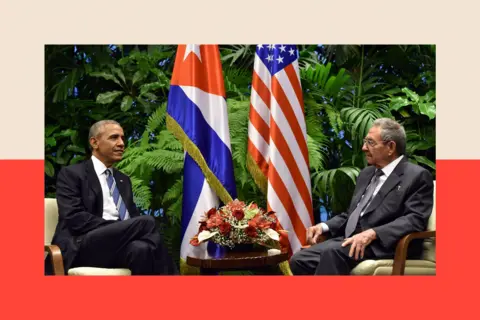
Next month marks the tenth anniversary of Obama’s visit to Havana as the first sitting US president to step foot on the island in almost a century.
In front of the Cuban leader, Raúl Castro, he delivered an extraordinary address – broadcast live on state television – in which he said he had come to “bury the last remnant of the Cold War in the Americas” and “extend the hand of friendship to the Cuban people”.
The man who oversaw the diplomatic thaw was the then-US ambassador to Cuba, Jeffrey DeLaurentis. I asked him whether the Cuban Revolution was now facing an existential threat.
“That will depend upon what some other countries might do”, DeLaurentis replied.
Venezuela’s oil support was worth some 35,000 barrels of crude a day to Cuba. There have been some broad indications that Russia might send oil to the island and the Cuban foreign minister, Bruno Rodríguez, was recently in Moscow for talks with his Russian counterpart and with Russian President Vladimir Putin. So far, though, no Russian fuel tankers have docked in Cuban ports.
Rodríguez also travelled to China, Vietnam and Spain trying to drum up support.
 Getty Images
“The rush to defend and help has certainly not been as enthusiastic and as significant as we’ve seen in the past. But there’s still a chance that other countries might take some action,” says DeLaurentis.
As to what Trump specifically wants in Cuba, the former lead US diplomat on the island says the administration is “trying to take coercive steps to bring the government to the table or capitulate but not necessarily collapse”.
“That’s a pretty risky strategy it seems to me, with a lot of potential for unintended consequences,” he adds.
Those consequences are already visible in the rapidly worsening humanitarian crisis which prompted Mexico to send tonnes of emergency aid to Cuba, including powdered milk and personal hygiene items. They’re already being felt every day by the families forced to cook with firewood and the drivers in urgent need of petrol.
Esteban Bello Rodríguez runs several “almendrones”, 1950s classic American automobiles, in which he ferries tourists around the iconic spots of Havana. His trade has been heavily impacted by the fuel scarcity and the fall in tourism.
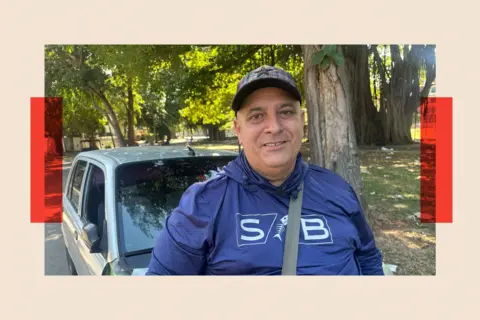
“There’s a problem here – the fuel problem – so surely the people at the top on both sides have to sit down, figure it out,” he says bluntly. “All I know is that a solution must be found because this is affecting the entire country – the people, nationwide. All of us.”
The real power
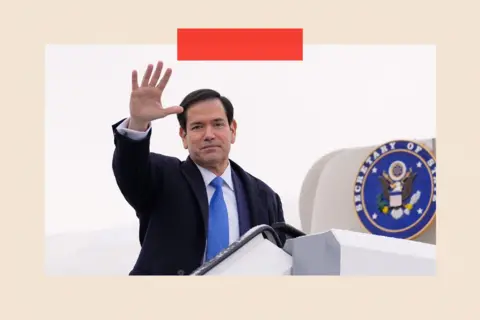
On the US side, Cuba policy is largely being led by the Secretary of State, Marco Rubio – a Cuban-American son of exiles and former Florida senator.
Trump says Rubio is talking to the top tier of the Cuban government and for days there’s been widespread speculation over who might lead that negotiation on the Cuban side. Cuban economist Ricardo Torres says that the only dealmaker on the island is Raúl Castro, even at the revolutionary leader’s advanced age of 94.
 AFP via Getty Images
“The only people with capacity to engage in a meaningful negotiation are people close to Raúl. The civilian government doesn’t have any real power – including President Miguel Díaz-Canel”, he argues.
“The real power in Cuba is Raúl and the closed circle around him.”
Last week, the Axios news outlet reported that his grandson, Raúl Rodríguez Castro – commonly known in Cuba as “El Cangrejo”, meaning The Crab – is the Trump administration’s point of contact inside Castro’s inner circle. If so, he’s considered one of his grandfather’s most trusted confidantes, having been his personal bodyguard, and more business-orientated than ideological, with no high-level diplomatic experience. Neither side, especially not the Cubans, have confirmed he’s in talks with Rubio.
“In the case of Venezuela, the Trump administration has been very pragmatic,” adds Torres.
Rubio has seemingly been happy to deal with an interim government in Caracas under Delcy Rodríguez and Washington appears to be looking to persuade the conservative Cuban-American lobby in Florida of the benefits of negotiating with a similarly defenestrated regime in Havana.
However, despite the public adherence to the “maximum pressure” strategy, Washington does seem to fear that total political change overnight in Venezuela or Cuba would be profoundly destabilising and could prompt a migration crisis as well as humanitarian one.
 AFP via Getty Images
Several Cuba watchers have noted that Rubio’s tone towards the island was markedly softer in recent comments he made at the Munich Security Conference, with an emphasis on economic reforms rather than a root-and-branch political transformation.
“In a way it almost sounded like a strange variant of Obama 2.0 in terms of economic reforms and so forth,” said former ambassador DeLaurentis. “That signalled to me that they are looking for a Delcy-like figure to negotiate with.”
“Ten to 20 years ago, the diaspora in south Florida would have been completely opposed to that kind of approach. But I guess that now they’d give the president and the secretary the benefit of the doubt, and allow this sort of scenario to play out,” adds DeLaurentis.
Meanwhile, any visitor wanting to see the photograph of the pre-revolutionary woman cooking with firewood will have to wait. The museum has been closed for over a year for refurbishments and now there’s no fuel to continue the work.
In what is now the most challenging time in the island’s modern history, it’s not yet clear if only the Museum of the Revolution will be undergoing a renovation this year – or the Cuban Revolution itself.
Top picture credit: AFP via Getty Images

BBC InDepth is the home on the website and app for the best analysis, with fresh perspectives that challenge assumptions and deep reporting on the biggest issues of the day. Emma Barnett and John Simpson bring their pick of the most thought-provoking deep reads and analysis, every Saturday. Sign up for the newsletter here
BBC News World
G7 nations to hold emergency meeting on oil as stock markets fall
BBC News World
Guinea opposition leader urges ‘direct resistance’ after 40 parties dissolved

BBC News World
Australia urged to protect Iran women’s football team as they prepare to fly home

BBC News World
N Korea cancels Pyongyang Marathon for ‘some reasons’

BBC News World
Istanbul’s ex-mayor on trial for corruption charges
2017 actress assault case: Kerala HC notice to actor Dileep, others on govt appeal
2017 actress assault case: Kerala HC notice to actor Dileep, others on govt appeal
Govt considering lottery system, delinking women’s quota from census, delimitation
The government is considering implementing the Nari Shakti Vandan Adhiniyam before the 2027 Uttar Pradesh and Uttarakhand assembly elections
Govt considering lottery system, delinking women’s quota from census, delimitation
The government is considering implementing the Nari Shakti Vandan Adhiniyam before the 2027 Uttar Pradesh and Uttarakhand assembly elections


SC asks Centre to draft ‘no-fault compensation policy’ for serious Covid vaccine side effects
‘Only way is to bring in Uniform Civil Code’: SC on PIL seeking equal inheritance rights for Muslim women
Rahul Gandhi arrives in Haryana’s Sonipat to attend wedding in farmer’s family
Rahul Gandhi visited Madina village in Sonipat for a wedding in a farmer’s family, where he was greeted by Congress...
Madhya Pradesh Cong MLA’s election cancelled for failing to declare criminal cases
The Madhya Pradesh high court said Mukesh Malhotra’s failure to declare criminal cases in his election affidavit amounted to a...
Restaurants face LPG supply crisis, NRAI warns of ‘catastrophic closures’
Restaurants across various parts of the country have reported shortage in the supply of commercial cooking gas, with the National...
Restaurants face LPG supply crisis, NRAI warns of ‘catastrophic closures’
Restaurants across various parts of the country have reported shortage in the supply of commercial cooking gas, with the National...
Sensex, Nifty today LIVE: Shares expected to open higher day after bloodbath as Trump hints war could end soon
Sensex, Nifty today LIVE updates: Investors are keeping a close watch on the markets after Monday’s, March 9’s, sharp sell-off,...
-
Politics1 week ago
Are you James Bong? Supreme Court slams Rajasthan police
-

 Politics2 weeks ago
Uttarakhand Transformation Dialogues 2026: Dr R Meenakshi Sundaram outlines reform roadmap for 2047 goal
-
 UsaLocalNews1 week ago
UK will allow US to use bases to strike Iranian missile sites, PM says
-

 Tech4 days ago
Are Walking Pads Worth It? This Is My Experience as a Fitness Expert
-

 Entertainment3 days ago
Prince Harry And Meghan Reportedly ‘Scared’ As ‘Desperate’ Sarah Ferguson Could Spill Royal Secrets Amid Scandal
-

 Fashion2 days ago
Suhana Khan’s Anamika Khanna lehenga pairs pastel panels with floral embroidery
-

 UsaLocalNews1 week ago
England ‘given reassurances’ over safety in Turkey
-

 Sports2 weeks ago
‘Appalling weekend’ – Arokodare & Mundle latest players to be racially abused