
Connect with us

HealthNews

Democrats Keep Healthcare at the Fore

​The Host

Julie Rovner

KFF Health News

@jrovner

@julierovner.bsky.social

Read Julie’s stories.

Julie Rovner is chief Washington correspondent and host of KFF Health News’ weekly health policy news podcast, “What the Health?” A noted expert on health policy issues, Julie is the author of the critically praised reference book “Health Care Politics and Policy A to Z,” now in its third edition.

Senate Democrats hope a little-used law from the 1990s will help draw attention to the healthcare cost issue by forcing a vote on the Trump administration’s recent changes to the Affordable Care Act.

Meanwhile, Health and Human Services Secretary Robert F. Kennedy Jr. is demanding information from a medical journal that retracted a study that backed Kennedy’s claims of vaccine harm.

This week’s panelists are Julie Rovner of KFF Health News, Anna Edney of Bloomberg News, Sheryl Gay Stolberg of The New York Times, and Lauren Weber of The Washington Post.

Panelists

Anna Edney

Bloomberg News

@annaedney

@annaedney.bsky.social

Read Anna’s stories.

Sheryl Gay Stolberg

The New York Times

@SherylNYT

Read Sheryl’s stories.

Lauren Weber

The Washington Post

@LaurenWeberHP

@laurenweberhp.bsky.social

Read Lauren’s stories.

Among the takeaways from this week’s episode:

As the midterm elections approach, congressional Democrats are pushing back on newly finalized guidelines from the Trump administration for ACA plans. The guidelines allow the sale of plans with fewer benefits and bigger deductibles next year, further eroding protections designed to keep healthcare affordable. With many voters concerned about the cost of care, Democrats’ push could prove a potent campaign message come November.

State officials in Texas and Alabama are continuing to crack down on abortion access. And new reporting reveals a trend of women going to great lengths to seek abortion care only to learn that their home pregnancy test results were false positives and they’re not pregnant.

Two medical journals recently retracted separate studies that linked vaccines to harmful health problems, with Kennedy pushing back. And legal action over Kennedy’s reconstituted vaccine panel and its decisions is leaving the nation without traditional outside expert input into seasonal vaccines as the flu season approaches — though the American Academy of Pediatrics has pointed out that Kennedy could resolve the legal issues by simply appointing experts to the panel with vac  

Continue Reading
Click to comment

Leave a Reply

Your email address will not be published. Required fields are marked *

HealthNews

Arrests of Immigrant Parents Create Mental Health Crisis for Children

​LOS ANGELES — Damian Zermeño, 15, sensed something was wrong the moment he got home from school.

His aunt sat at the dining table, sobbing. His father, who’d walked him to the bus stop that morning and promised to take him to dinner when he got back, wasn’t there.

Saúl Zermeño, a 45-year-old single dad, had gone to a routine check-in appointment at an Immigration and Customs Enforcement office that morning, a requirement he’d complied with for years. The father had deferred action that allowed him to stay and work in the U.S., according to his attorney. But that day, Oct. 3, officers deported him to Mexico, where he hadn’t lived since he was 9 years old. Zermeño had been Damian’s sole caregiver since he was a baby because his mother chose not to be involved in the boy’s life, the family said.

Suddenly, Damian, who was born in the U.S., found himself separated from his father by thousands of miles and a heavily guarded border. The previously cheerful 10th grader, who doesn’t have a driver’s license and can make a few basic dishes but isn’t used to cooking for himself, faced navigating his teenage years alone, his dad’s presence reduced to a two-dimensional image on his phone.

“I thought it wasn’t true,” Damian said. “I just went to my room. I didn’t want to leave. I didn’t even want to eat.”

Damian is among an estimated hundreds of thousands of children, most of them U.S. citizens, separated from a parent by the Trump administration’s deportation policies. Their mothers and fathers have been deported or locked for months inside detention centers, often miles away from where their families live. These children are separated, sometimes violently, from the adults they depend on. Parents have been arrested while dropping kids off at school, inside their homes, and at immigration check-ins with their children present. Most people detained have no criminal conviction. (Being in the U.S. without authorization is typically a civil offense). With their parents gone, kids’ lives are plunged into fear and uncertainty.

As a result, a generation of children from immigrant families are exhibiting mental health problems that could affect them for years.

Parents, therapists, and others who work with immigrant families said they’ve already encountered preschoolers with speech delays, elementary school children who talk of suicide, and teenagers too anxious to leave the house. Research has shown repeatedly that separating children from their parents harms their health and development. The stress of losing a primary caregiver creates havoc in a child’s brain and body, increasing their risk for mental and physical health problems, including depression, anxiety, post-traumatic stress disorder, a weakened immune system, and developmental delays.

“You can just see it in their faces; it’s almost like the light has been dimmed in their eyes,” said the Rev. Tanya Lopez, a pastor at Downey Memoria  

Continue Reading

HealthNews

Tennessee Pharmacies Sell Potent Ivermectin, Led by Anti-Vaccine Doctor Who’s Taken ‘Bucketloads’

​NASHVILLE, Tenn. — Four years ago, Tennessee became the first state to allow adults to buy the antiparasitic drug ivermectin from a pharmacy without first seeing a doctor. Pharmacies can use a pre-written, blanket prescription to sell to just about anyone who walks through their doors.

The drug is now marketed and sold across the state in roadside shops and small-town strip malls with little oversight from health authorities. Highway billboards advertise ivermectin as “Available Without a Prescription in Tennessee!” while dozens of pharmacies offer highly concentrated pills, sometimes at 10 or 20 times the potency of a standard tablet.

Ivermectin is a Nobel Prize-winning, generally safe drug approved by the FDA for treating parasitic diseases in humans, which can generally be done with a single dose of three or four prescription-strength tablets. It is also used as a dewormer for horses and other livestock.

Its popularity surged during the pandemic as fringe doctors and anti-vaccine activists promoted it as a treatment for covid. Clinical trials have shown that ivermectin is not effective against covid.

Nonetheless, it has since become a symbol of resistance against the medical establishment among conservatives and followers of the Make America Healthy Again movement, championed by Health and Human Services Secretary Robert F. Kennedy Jr.

Timothy Caulfield, a professor at the University of Alberta who studies health misinformation, said ivermectin became an “ideological flag” during the covid pandemic, opening the door for influencers to push the drug for other ailments to a “captured audience” even without proof it works for those conditions.

“This is really about profit. This is about political identity. This is about creating distrust in the existing biomedical community. This is about money,” Caulfield said in an interview with ABC News, which partnered with KFF Health News to report on ivermectin.

After a hantavirus outbreak on a cruise ship earlier this year, unproven claims that ivermectin is effective against the virus have been spread by some popular social media accounts and right-wing figures, including former congresswoman Marjorie Taylor Greene. The World Health Organization says it has seen no research that shows ivermectin is an effective hantavirus treatment.

Tennessee’s ivermectin bill was shepherded by a Republican supermajority in 2022. Its passage blindsided state medical officials and handed a victory to medical groups that spread covid misinformation.

Some pharmacy websites now offer the drug as a treatment for covid, “long haul vax symptoms,” diabetes, or cancer — despite no evidence of its effectiveness for those purposes — while the new law largely gives pharmacists immunity from lawsuits or professional sanctions related to ivermectin.

The law was also a harbinger of legislation to come: More than two dozen states have since considered look-alike bills that wo  

Continue Reading

HealthNews

Journalists Highlight Medical Neglect in ICE Detention, RFK Jr. Antidepressant Comments

​KFF Health News chief Washington correspondent Julie Rovner discussed Health and Human Services Secretary Robert F. Kennedy Jr.’s position on antidepressants on WAMU’s 1A on June 10.

Click here to hear Rovner on 1A.

KFF Health News journalist Rae Ellen Bichell discussed, on WBUR’s Here & Now on June 10, a recent investigation that found immigration facilities aren’t providing adequate medical care.

Click here to hear Bichell on Here & Now.

Read Bichell’s “Festering Infections to Untreated Cancer: ICE Detainees Describe Medical Neglect Across US,” reported with Maia Rosenfeld and Renuka Rayasam and in collaboration with The Associated Press.

KFF Health News national public health correspondent Amy Maxmen discussed the Ebola outbreak in the Democratic Republic of Congo on WNYC’s The Brian Lehrer Show on June 9.

Click here to hear Maxmen on The Brian Lehrer Show.

Read Maxmen’s “‘We Live With Fear’: In Congo, Doctors Face Ebola With Little Protection.”

Céline Gounder, KFF Health News’ editor-at-large for public health, discussed on Fox’s LiveNow on June 8 how public health experts are preparing for the World Cup.

Click here to watch Gounder on LiveNow.

Elisabeth Rosenthal, KFF Health News’ senior contributing editor for health news analysis and author of the bestseller An American Sickness: How Healthcare Became Big Business and How You Can Take It Back, discussed the challenges of reforming the American healthcare system on NBC’s Dateline on June 5.

Click here to watch Rosenthal on Dateline.

KFF Health News is a national newsroom that produces in-depth journalism about health issues and is one of the core operating programs at KFF—an independent source of health policy research, polling, and journalism. Learn more about KFF.This <a target=”_blank” href=”https://kffhealthnews.org/on-air/on-air-june-13-2026-antidepressants-ice-medical-neglect-ebola-world-cup/”>article</a&gt; first appeared on <a target=”_blank” href=”https://kffhealthnews.org”>KFF Health News</a> and is republished here under a <a target=”_blank” href=”https://creativecommons.org/licenses/by-nc-nd/4.0/”>Creative Commons Attribution-NonCommercial-NoDerivatives 4.0 International License</a>.<img src=”https://kffhealthnews.org/wp-content/uploads/sites/8/2023/04/kffhealthnews-icon.png?w=150&quot; style=”width:1em;height:1em;margin-left:10px;”>
<img id=”republication-tracker-tool-source” src=”https://kffhealthnews.org/?republication-pixel=true&post=2249751&amp;ga4=G-J74WWTKFM0&quot; style=”width:1px;height:1px;”>  

Continue Reading

HealthNews

Final Rules for Medicaid Work Requirements Are Out. Here’s What You Need To Know.
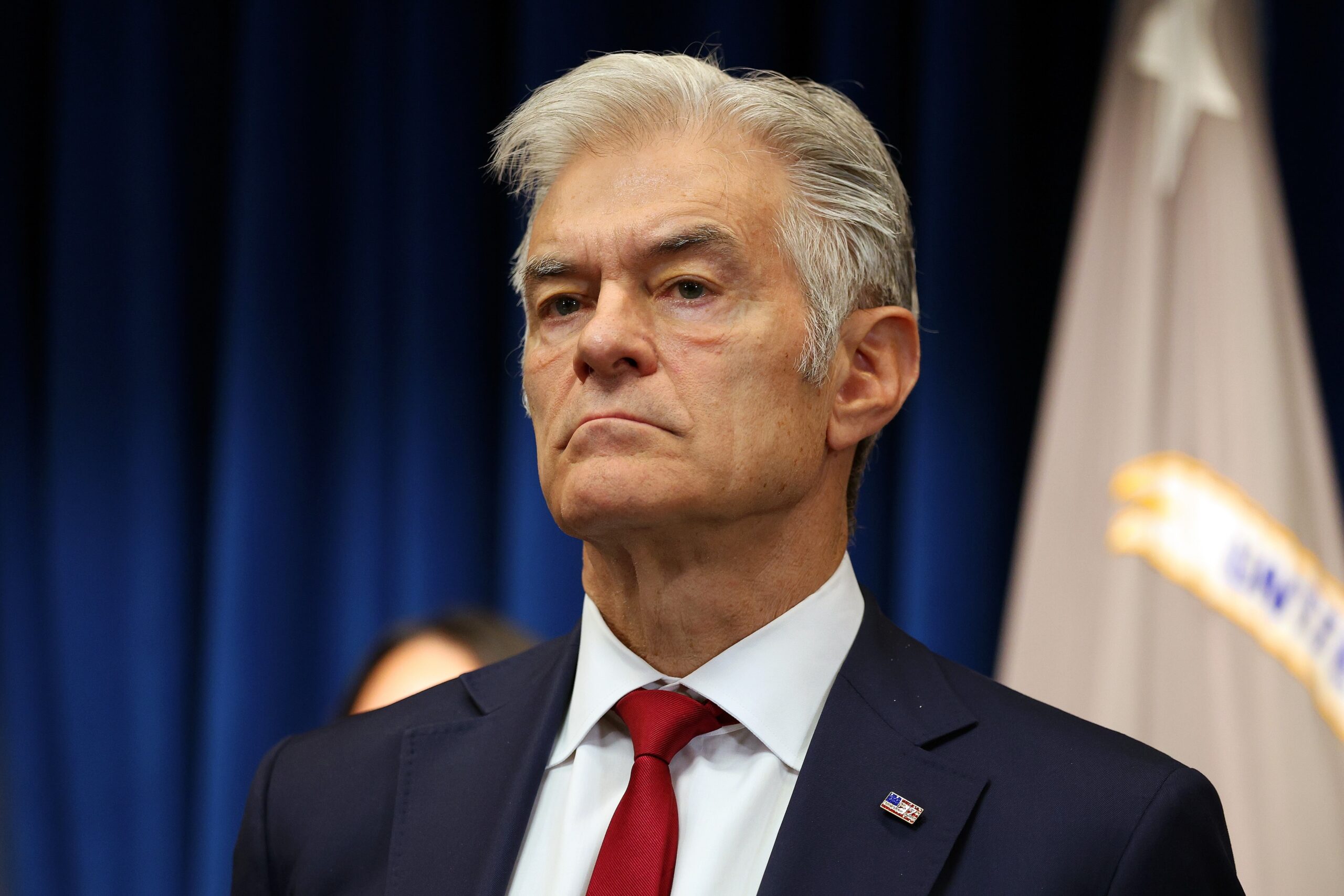
​The Trump administration has issued final rules on how states should ensure that millions of Medicaid enrollees prove they’re working or completing other activities, such as job training, volunteering, or being enrolled in an educational program.

The Centers for Medicare & Medicaid Services released the rules on June 1. That deadline was set last year in the GOP tax-and-spending law known as the One Big Beautiful Bill Act, which established a work requirement for certain people enrolled in Medicaid, the state-federal health insurance program for people with low incomes or disabilities.

Medicaid agencies are scrambling to rework IT systems and make sure they have staff to effectively enforce the rules, while also keeping enrollees from losing coverage for administrative reasons, such as difficulty navigating state eligibility portals.

The newly announced regulations offer a clearer picture of what roughly 18.5 million Medicaid enrollees will have to do to prove they qualify for benefits.

Jim Torres, who helps people enroll in health coverage at the Samuel U. Rodgers Health Center in Kansas City, Missouri, said a “very small percentage” of his clients have heard of the changes coming to Medicaid.

“These folks have very busy lives. They’re doing the best they can to get by,” he said. “It’s just not a top-of-mind thing for most of them.”

Health policy researchers and consumer advocates said enrollees should keep a few things in mind as the Jan. 1, 2027, rollout approaches in most states.

1. The work rules won’t apply to everyone.

The new rules will apply to people covered through what’s known as Medicaid expansion. Since 2014, more than 40 states and the District of Columbia have decided to allow more people into their Medicaid programs, generally low-income adults without dependents. Georgia and Wisconsin offer coverage to some people in this group, so they’ll be subject to the rules.

Children and pregnant people, as well as individuals with disabilities who receive Social Security payments — all groups that already qualify for Medicaid — won’t be subject to the rules. Nor will people determined to be “medically frail,” or too sick to work.

People subject to the work rules are “crowding out” people in the Medicaid program who are “truly in need,” CMS Director Mehmet Oz claimed during a June 1 press call. “Work requirements are going to turn this around, we hope.”

The rules are set to take effect in most places in January. Nebraska started enforcing them in May. Montana plans to start in July but won’t kick people off until October. Arkansas will do a “soft” launch in July — it will start enforcing the rules but with no penalties until next year.

2. States will take your word that you’re too sick to work. For now.

Federal officials have stressed that states should make the process of reporting hours and requesting exemptions as simple as pos  

Continue Reading

HealthNews

The Drip, Drip, Drip of Declining Coverage
​The Host

Julie Rovner

KFF Health News

@jrovner

@julierovner.bsky.social

Read Julie’s stories.

Julie Rovner is chief Washington correspondent and host of KFF Health News’ weekly health policy news podcast, “What the Health?” A noted expert on health policy issues, Julie is the author of the critically praised reference book “Health Care Politics and Policy A to Z,” now in its third edition.

When Congress failed to extend the covid-era enhanced subsidies for the Affordable Care Act, many experts predicted millions of people would lose coverage because they would be unable to make payments toward the higher premiums. It has taken a few months, but that prediction seems to be coming true.

Meanwhile, controversy in the medical community about how — or whether  — to work with the Trump administration burst into the open at the annual meeting of the American Diabetes Association, as members who were handing out an editorial criticizing the administration’s cuts to biomedical research were evicted from the event, prompting a backlash.

This week’s panelists are Julie Rovner of KFF Health News, Lizzy Lawrence of Stat, Sandhya Raman of Bloomberg Law, and Lauren Weber of The Washington Post.

Panelists

Lizzy Lawrence

Stat

@LizzyLaw_

@lizzylawrence.bsky.social

Ready Lizzy’s stories.

Sandhya Raman

Bloomberg Law

@SandhyaWrites

@sandhyawrites.bsky.social

Lauren Weber

The Washington Post

@LaurenWeberHP

@laurenweberhp.bsky.social

Read Lauren’s stories.

Among the takeaways from this week’s episode:

A new report from The Commonwealth Fund highlights enrollment declines in Affordable Care Act marketplaces, a trend experts predicted when Congress did not renew the enhanced ACA tax credits at the end of 2025. As consumers continue to struggle with rising costs for groceries, gas, and other expenses, individuals who lost that additional financial assistance to purchase health insurance may be facing higher premium costs and more out-of-pocket expenses.

Concerns over the difficulty of implementing the administration’s Medicaid work requirements, along with potential legal challenges, may mean the regulations could be delayed or even reversed. For example, doctor and patient groups contend that the requirement that physicians determine whether each individual can work the required 80 hours per month will create unintended consequences, such as paperwork and bureaucratic hassles, for patients and their doctors, rather than decrease fraud  

Continue Reading

Latest News

Politics41 minutes ago

Karnataka plans smart cards to curb Shakti scheme free bus travel fraud

 The proposal follows concerns within the government that free travel benefits have been claimed using fake Aadhaar cards 

Politics2 hours ago

‘Useless fellows’: Kharge loses cool at Congress workers over pro-Shivakumar slogans in Bengaluru

 A video from the event showed workers chanting Shivakumar’s initials as senior Congress leaders, including Shivakumar, urged the crowd to...

Politics2 hours ago

‘Useless fellows’: Kharge loses cool at Congress workers over pro-Shivakumar slogans in Bengaluru

 A video from the event showed workers chanting Shivakumar’s initials as senior Congress leaders, including Shivakumar, urged the crowd to...

Politics3 hours ago

Two killed in BMW crash on Mumbai–Vadodara highway near Badlapur

 The convertible BMW, which was reportedly being driven at high speed of 251 kmph with its hood open, was completely...

Uncategorized3 hours ago

‘No confidence move’ against Shweta Menon-led leadership adds to speculations over AMMA general body

​ The annual general body of the film fraternity forum is taking place in Kochi amid a series of controversies  

Uncategorized3 hours ago

Seven killed, several hospitalised after ammonia gas leak at a seafood processing unit in Tamil Nadu’s Tiruvallur district

​ Chief Minister Vijay gives instructions to form an enquiry committee to probe the ammonia gas leak incident, announces ₹2 lakh...

Uncategorized3 hours ago

CM Vijay forms three-member committee to probe ammonia gas leak near Periyapalayam

​ The Director of Industrial Safety and Health, Member Secretary of the Tamil Nadu Pollution Control Board and Additional Director of...

Uncategorized3 hours ago

Military strength doesn’t come from dependence on global markets, India seeks to become defence manufacturer: PM Modi

​ Prime Minister Narendra Modi says time has come for India to enter the next phase of maritime development, and the...

Uncategorized3 hours ago

YSRCP alleges political vendetta behind raids at MLC Chandrasekhar Reddy’s educational institutions

​ According to MLC Appi Reddy, officials carried out inspections at six educational institutions run by Mr. Chandrasekhar Reddy in Nellore...

Uncategorized3 hours ago

CPI (M) opposes proposed rural power DISCOM, demands withdrawal of APRAPL plan

​ APRAPL is a “deemed DISCOM” existing only on paper and it lacked the infrastructure, financial resources and operational capabilities required...

Trending News

Join Our Newsletter

Stay updated with breaking news and exclusive content.