Connect with us

HealthNews

Journalists Share Latest on Baby Formula Safety, Estrogen Patches, and Postcancer Costs

​Céline Gounder, KFF Health News’ editor-at-large for public health, discussed the results of the FDA’s largest baby formula safety test on CBS News 24/7’s The Daily Report on April 29. She also discussed how women seeking treatment for menopause symptoms are facing a shortage of estrogen patches on CBS News’ CBS Mornings on April 27.

Click here to watch Gounder on The Daily Report.

Click here to watch Gounder on CBS Mornings.

KFF Health News senior correspondent Renuka Rayasam discussed the rising cost of postcancer care on WUGA’s The Georgia Health Report on April 24.

Click here to hear Rayasam on The Georgia Health Report.

Read Rayasam’s “They’re in Remission, but Their Medical Bills Aren’t: Cancer Survivors Navigate Soaring Costs.”

KFF Health News is a national newsroom that produces in-depth journalism about health issues and is one of the core operating programs at KFF—an independent source of health policy research, polling, and journalism. Learn more about KFF.This <a target=”_blank” href=”https://kffhealthnews.org/on-air/on-air-may-2-2026-baby-formula-safety-test-menopause-postcancer-care-costs/”>article</a&gt; first appeared on <a target=”_blank” href=”https://kffhealthnews.org”>KFF Health News</a> and is republished here under a <a target=”_blank” href=”https://creativecommons.org/licenses/by-nc-nd/4.0/”>Creative Commons Attribution-NonCommercial-NoDerivatives 4.0 International License</a>.<img src=”https://kffhealthnews.org/wp-content/uploads/sites/8/2023/04/kffhealthnews-icon.png?w=150&quot; style=”width:1em;height:1em;margin-left:10px;”>
<img id=”republication-tracker-tool-source” src=”https://kffhealthnews.org/?republication-pixel=true&post=2233479&amp;ga4=G-J74WWTKFM0&quot; style=”width:1px;height:1px;”>  

Continue Reading
Click to comment

Leave a Reply

Your email address will not be published. Required fields are marked *

HealthNews

Prevention Efforts Increasingly See Suicide Through a Broader Lens
​If you or someone you know may be experiencing a mental health crisis, contact the 988 Suicide & Crisis Lifeline by dialing or texting “988.”

Someone in America dies by suicide every 11 minutes. It’s that common. But that doesn’t make it normal.

Humans have evolved over centuries to survive. So when people try to kill themselves, something has gone wrong. Typically, the assumption is that something happened in the person’s mind — a mental illness.

That’s led prevention efforts to typically focus on connecting people with treatment in moments of crisis.

But that’s changing. There’s a growing movement asking a different question: What went wrong in the world around that person?

During the covid pandemic, rates of anxiety and depression spiked — not because everyone’s brain chemistry suddenly changed but because the world changed. People were out of work, isolated, struggling to make ends meet.

That led many people in the mental health advocacy world to call for a broader approach. Treatments and crisis care are vital, they say, but the goal of suicide prevention needs to expand beyond stopping people from dying to also giving them reasons to live.

Decades of research supports this idea. Interventions that improve people’s lives and prospects, such as running food banks to ensure families don’t go hungry or hosting weekly book clubs for homebound seniors to make friends, can reduce suicide.

I spoke with Chris Pawelski, a fourth-generation farmer in Orange County, New York, for this story. He told me how his dad’s passing, caring for his mom with dementia, and the struggling finances of his family’s onion farm brought him to consider suicide.

“It’s all stuff collapsing down upon you,” he said. “It’s weeks, months, years of dealing with all sorts of pressures that you can’t alleviate.”

What helped him through that time was not just family support and therapy. It was also an economic plan. He worked with an organization called NY FarmNet, which provided a free financial consultant who helped Pawelski transition from farming onions for wholesale to a new model, growing varied produce to sell directly to consumers.

Today, Pawelski’s business has stabilized, and he and his wife are paying down debt. He advocates for programs to help others in similar situations.

That can mean crisis hotlines and access to affordable therapy, Pawelski said. But what he really wants are policy changes that help people address underlying hardships before a crisis strikes.

“We need to think broader and longer-term than a helpline,” he said. That’s “a band-aid on a gunshot wound.”

ELEVEN MINUTES

Saving Lives by Changing Lives: The Next Frontier in Suicide Prevention

Someone in America dies by suicide every 11 minutes. It’s a tragic  

Continue Reading

HealthNews

When Natural Disasters Strike, Another Crisis Hits Those Recovering From Opioid Addiction

​If you or someone you know is seeking help for addiction recovery, contact the free and confidential treatment referral hotline, 1-800-662-HELP, or visit findtreatment.gov.

A day after Hurricane Helene ripped through western North Carolina in late September 2024, Toni Brewer had no power or water. The storm had strewn fallen trees across most roads, wiped out phone and internet communications, and put some neighborhoods near her Asheville home underwater.

Brewer cleared out the food in her refrigerator, grabbed some clothes, and drove more than an hour southwest with her partner to Franklin, to stay with relatives.

When she arrived, she opened the center console of her car, where she kept medication, and discovered another crisis. She had only three days’ worth of Suboxone, a brand of buprenorphine, a prescription drug that eases opioid cravings. Without it, she risked relapsing into a life she described as miserable.

She recalled what it felt like to have those cravings and panicked.

“It’s terrifying just to have that feeling again of, ‘I need this, and I’ll do whatever it takes to get this,’” said Brewer, who had been in recovery from opioid addiction for 18 months at the time. She needed a new prescription but knew communication lines at her doctor’s office were down.

Now, a group of doctors is using the example of Hurricane Helene to urge federal lawmakers to help improve access to substance use medications in severe weather emergencies. Four physicians working in addiction medicine published an American Journal of Public Health editorial that outlines strategies for getting medication to people in recovery during natural disasters.

As climate change threatens to cause an increased number of disasters in the U.S., the group of doctors urged state and federal governments to act soon or risk allowing more disasters to aggravate overdoses, relapses, and deaths caused by opioid use disorder, an ongoing epidemic that has killed more than 800,000 people in the U.S. since 1999.

One study estimated that after Superstorm Sandy in 2012, 70% of New Yorkers who relied on recovery medications couldn’t get enough of them. In the two years following Hurricane Maria’s devastation in Puerto Rico in 2017, overdose reports increased, another study found. The Tubbs and Camp fires in Northern California caused substantial disruptions in patients’ access to opioid addiction medications, found a study published in 2022.

A combination of factors aggravates the opioid crisis in the U.S., the AJPH editorial authors noted. Mental health stressors, treatment disruptions, drug market volatility, and economic decline all create conditions in which climate-related disasters heighten the risk of overdose deaths.

“We make it so challenging for them to access treatment medications in the first place,” said Elizabeth Cerceo, the climate health director at Rowan University’s Cooper Medical School and a co-autho  

Continue Reading

HealthNews

Saving Lives by Changing Lives: The Next Frontier in Suicide Prevention

​If you or someone you know may be experiencing a mental health crisis, contact the 988 Suicide & Crisis Lifeline by dialing or texting “988.”

Someone in America dies by suicide every 11 minutes. It’s that common. But not normal.

Humans have evolved over centuries to survive. So when people try to kill themselves, something has gone wrong. Typically, the assumption is that something happened in the person’s mind — a mental illness.

But in recent decades, there’s been a growing movement to ask a different question: What went wrong in the world around that person?

For Chris Pawelski, it was a torrent of factors. His dad — one of his best friends, whom he worked with daily for decades — was diagnosed with renal cancer and died six months later. Pawelski was left as the primary caregiver for his mom, who had dementia.

His family’s multigenerational onion farm in New York’s Orange County — where he first worked as a 5-year-old, collecting onions that fell out of crates — was hemorrhaging money. Pawelski said he was growing roughly $200,000 worth of crops some years but took home only about $20,000, unable to negotiate higher prices with wholesale buyers that dominated the market.

Debt to suppliers and equipment vendors piled up, and the burden strained his marriage. He had little time for friends, working sunup to sundown seven days a week, desperately trying to preserve his family’s legacy.

“It’s all stuff collapsing down upon you,” he said. “It’s weeks, months, years of dealing with all sorts of pressures that you can’t alleviate.”

Pawelski started wondering what it would be like to get hit by a truck on the busy road in front of his house. “You think you’re already on your way out, so why wait?” he said.

  (Jeffrey Basinger for KFF Health News)

After his father died, Pawelski became his mother’s primary caregiver. Meanwhile he was struggling to preserve his farm — his family’s legacy. “It’s all stuff collapsing down upon you,” he says. (Jeffrey Basinger for KFF Health News)

Millions of Americans have serious thoughts of killing themselves, and tens of thousands die by suicide annually. Suicide repeatedly ranks among the top 10 leading causes of death — making the U.S. an outlier among developed nations.

Prevention efforts have typically focused on connecting individuals in crisis with treatment — despite therapy and medication being notoriously expensive, the healthcare system struggling to meet demand, and a consensus that suicide is caused by a host of factors, including but not limited to mental illness.

Now, many people working to prevent suicide, including some who have tried to harm themselves or lost a loved one to it, are calling for a broader approach. Some were galvanized by the covid pandemic, when rates of anxiety and depression spiked — not because everyone’s brain chemistry suddenly changed but because the world changed.   

Continue Reading

HealthNews

Watch: Acknowledging Health Care’s Great Divide
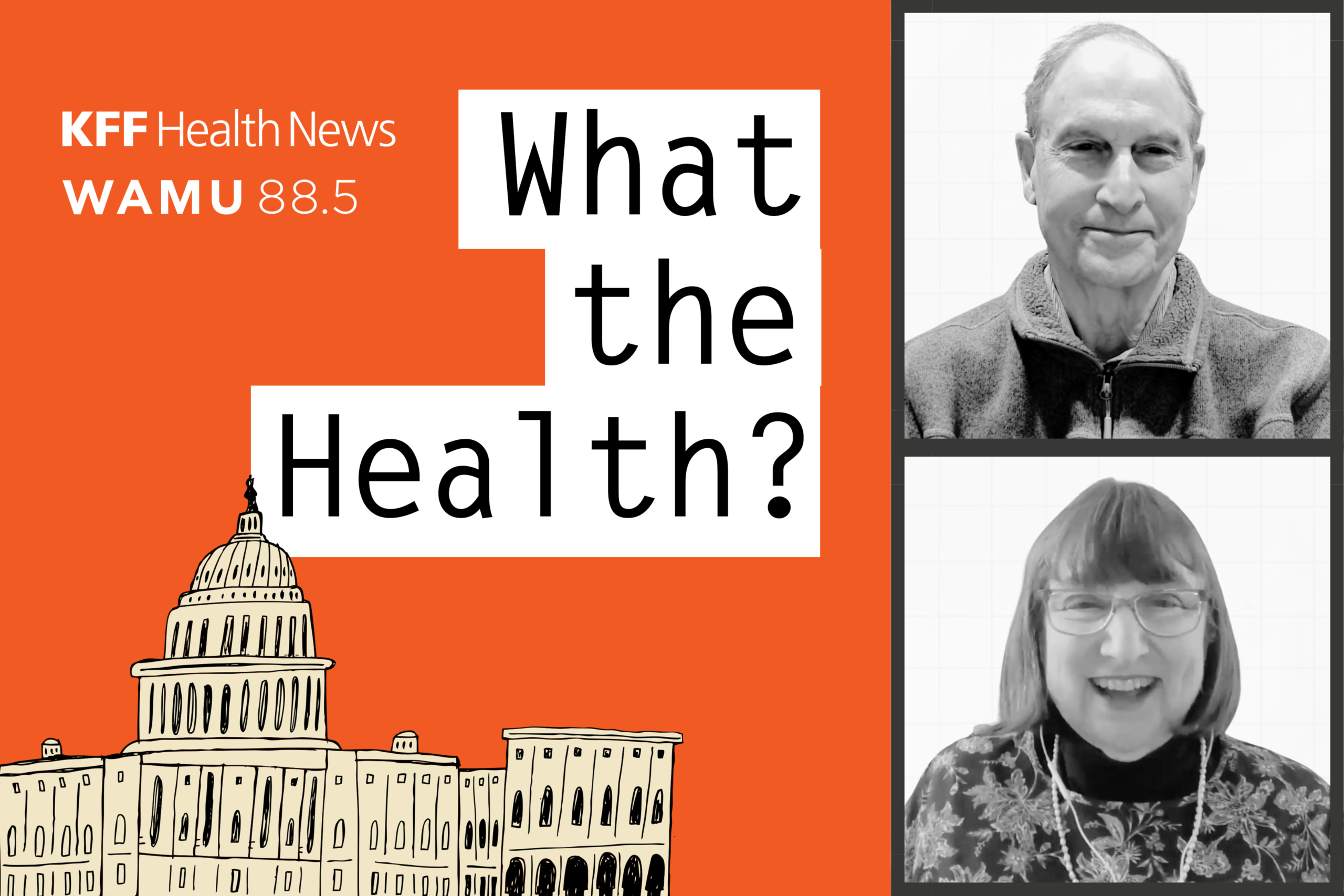
​In this “How Would You Fix It?” interview, Julie Rovner, KFF Health News’ chief Washington correspondent and host of the What the Health? podcast, sat down with David Blumenthal — a physician, health policy expert, former Obama administration official, and author — to explore the dynamics that make fixing the nation’s health care system so difficult.

They discussed the pivotal role the president of the United States plays in health policy — whether it is building support for or opposition to new plans and proposals. “Presidents have a level of authority which is often underappreciated, especially in health care,” Blumenthal said.

Blumenthal and Rovner also discussed the historical reasons the U.S. has been unable to enact universal health care, incrementalism versus sweeping change, and what he described as “the dance” between proponents and opponents — usually a clear party-line split between Democrats and Republicans — of major health care reforms.

Today, the split seems to have come to a head, as public health, science, and expertise are being viewed by one end of the political spectrum as “the opposition,” Blumenthal said, which will complicate efforts. Still, he outlined ideas for moving forward.

An abbreviated version of this interview aired April 23 on Episode 443 of What the Health? From KFF Health News: “RFK Jr. vs. Congress.”

Blumenthal’s latest book, Whiplash: From the Battle for Obamacare to the War on Science, co-written with James A. Morone, offers a behind-the-scenes look at how three presidential administrations pursued very different health policy goals.

KFF Health News is a national newsroom that produces in-depth journalism about health issues and is one of the core operating programs at KFF—an independent source of health policy research, polling, and journalism. Learn more about KFF.This <a target=”_blank” href=”https://kffhealthnews.org/health-industry/health-care-policy-political-divide-david-blumenthal-interview/”>article</a&gt; first appeared on <a target=”_blank” href=”https://kffhealthnews.org”>KFF Health News</a> and is republished here under a <a target=”_blank” href=”https://creativecommons.org/licenses/by-nc-nd/4.0/”>Creative Commons Attribution-NonCommercial-NoDerivatives 4.0 International License</a>.<img src=”https://kffhealthnews.org/wp-content/uploads/sites/8/2023/04/kffhealthnews-icon.png?w=150&quot; style=”width:1em;height:1em;margin-left:10px;”>
<img id=”republication-tracker-tool-source” src=”https://kffhealthnews.org/?republication-pixel=true&post=2230749&amp;ga4=G-J74WWTKFM0&quot; style=”width:1px;height:1px;”>  

Continue Reading

HealthNews

RFK Jr. vs. Congress

​The Host

Julie Rovner

KFF Health News

@jrovner

@julierovner.bsky.social

Read Julie’s stories.

Julie Rovner is chief Washington correspondent and host of KFF Health News’ weekly health policy news podcast, “What the Health?” A noted expert on health policy issues, Julie is the author of the critically praised reference book “Health Care Politics and Policy A to Z,” now in its third edition.

Health and Human Services Secretary Robert F. Kennedy Jr. completed his marathon tour of House and Senate committees this week to defend President Donald Trump’s proposed budget for his department, but he got grilled on lots of non-budget matters as well, most notably his proposed changes to the childhood vaccine schedule.

Meanwhile, Trump made some of his own health policy, signing an executive order to facilitate the use of hallucinogens to treat mental health conditions. That action came just days after it was suggested to him in a text message from podcaster/influencer Joe Rogan, who was present in the Oval Office for the signing.

This week’s panelists are Julie Rovner of KFF Health News, Victoria Knight of Bloomberg Government, Alice Miranda Ollstein of Politico, and Sheryl Gay Stolberg of The New York Times.

Panelists

Victoria Knight

Bloomberg Government

@victoriaregisk

Alice Miranda Ollstein

Politico

@AliceOllstein

@alicemiranda.bsky.social

Read Alice’s stories.

Sheryl Gay Stolberg

The New York Times

@SherylNYT

Read Sheryl’s stories.

Among the takeaways from this week’s episode:

There were fewer fireworks than expected during Kennedy’s four-day, whirlwind tour of Capitol Hill. One thing that was clear is that Kennedy got the political memo that he is to watch his vaccine rhetoric and keep the focus on politically palatable topics such as chronic disease and healthy eating. Still, there were episodes of indignation and grandstanding, from the secretary and from lawmakers. Kennedy also sometimes struggled to defend administration proposals to cut funding.

Among members who pressed Kennedy on vaccines was Sen. Bill Cassidy (R-La.), who is facing a difficult primary challenge. Cassidy, a physician, has in the past clashed with Kennedy over vaccines and has been targeted by the Make America Healthy Again movement. In hearings, however, Cassidy led with questions on abortion issues, which fit more aptly into his red-state politics. Meanwhile, though Cassidy’s Senate seat is considered at risk, it’s not clear that the MAHA muscle on the ground is living up to the threat.


Continue Reading

Latest News

Politics1 hour ago

‘Serious offence, interrogation necessary’: Court denies pre-arrest bail to Nida Khan in TCS Nashik case

 Referring to her offence as a “serious one”, the court stressed that Nida Khan was one of the prime accused...

Sports1 hour ago

BREAKING: The New Day part ways with WWE – Reports

​Just as the WWE Universe was coming to terms with the latest wave of releases, the Stamford-based promotion had parted...

Sports1 hour ago

“Thank you Mr. Slot!” – Former Manchester United star sends cheeky message to Liverpool boss ahead of upcoming Premier League clash

​Former Manchester United man Paul Parker has aimed a dig at Liverpool coach Arne Slot ahead of their Premier League...

Sports1 hour ago

“What an idiotic decision,” “YIKES”: College hoops fans react as Alabama transfer Davion Hannah commits to South Carolina

​Guard Davion Hannah finalized a decision regarding his collegiate future. After his freshman campaign with the Alabama Crimson Tide, he...

Sports1 hour ago

“He can’t get much slower atleast”: NFL fans react to viral Bo Nix running video after ankle injury amid botched surgery rumors

​The Denver Broncos suffered a major blow last season when star quarterback Bo Nix went down with a season-ending ankle...

Sports1 hour ago

Alex Zanardi’s wife Daniela Manni: The woman who stood by her husband through two crashes, three recoveries, and a lifetime

​Alex Zanardi, the two-time CART champion, four-time Paralympic gold medallist, and one of motorsport’s most extraordinary icons, passed away on...

Sports1 hour ago

Ian Garry goes full Jack Della Maddalena hater mode, revels in Carlos Prates’ beatdown

​Jack Della Maddalena lost to Carlos Prates at UFC Perth, and Ian Garry couldn’t be happier.  

Sports1 hour ago

RIP Alex Zanardi: The F1 career struggles, setbacks, and why he was always more than Formula One

​A legend in the world of sport, Alex Zanardi, has unfortunately passed away at the age of 59 on Friday,...

Sports1 hour ago

CSK debutant takes stunning diving catch to dismiss Will Jacks in CSK vs MI IPL 2026 match [Watch]

​Chennai Super Kings (CSK) debutant Ramakrishna Ghosh took a stunning diving catch to dismiss Mumbai Indians (MI) opener Will Jacks...

Sports1 hour ago

Be a Lucky Block DinoByte Event guide

​In Be a Lucky Block, the DinoByte Event gives players a chance to collect five unique brainrots and unlock the...

Trending News

Join Our Newsletter

Stay updated with breaking news and exclusive content.