Connect with us

HealthNews

When Natural Disasters Strike, Another Crisis Hits Those Recovering From Opioid Addiction

​If you or someone you know is seeking help for addiction recovery, contact the free and confidential treatment referral hotline, 1-800-662-HELP, or visit findtreatment.gov.

A day after Hurricane Helene ripped through western North Carolina in late September 2024, Toni Brewer had no power or water. The storm had strewn fallen trees across most roads, wiped out phone and internet communications, and put some neighborhoods near her Asheville home underwater.

Brewer cleared out the food in her refrigerator, grabbed some clothes, and drove more than an hour southwest with her partner to Franklin, to stay with relatives.

When she arrived, she opened the center console of her car, where she kept medication, and discovered another crisis. She had only three days’ worth of Suboxone, a brand of buprenorphine, a prescription drug that eases opioid cravings. Without it, she risked relapsing into a life she described as miserable.

She recalled what it felt like to have those cravings and panicked.

“It’s terrifying just to have that feeling again of, ‘I need this, and I’ll do whatever it takes to get this,’” said Brewer, who had been in recovery from opioid addiction for 18 months at the time. She needed a new prescription but knew communication lines at her doctor’s office were down.

Now, a group of doctors is using the example of Hurricane Helene to urge federal lawmakers to help improve access to substance use medications in severe weather emergencies. Four physicians working in addiction medicine published an American Journal of Public Health editorial that outlines strategies for getting medication to people in recovery during natural disasters.

As climate change threatens to cause an increased number of disasters in the U.S., the group of doctors urged state and federal governments to act soon or risk allowing more disasters to aggravate overdoses, relapses, and deaths caused by opioid use disorder, an ongoing epidemic that has killed more than 800,000 people in the U.S. since 1999.

One study estimated that after Superstorm Sandy in 2012, 70% of New Yorkers who relied on recovery medications couldn’t get enough of them. In the two years following Hurricane Maria’s devastation in Puerto Rico in 2017, overdose reports increased, another study found. The Tubbs and Camp fires in Northern California caused substantial disruptions in patients’ access to opioid addiction medications, found a study published in 2022.

A combination of factors aggravates the opioid crisis in the U.S., the AJPH editorial authors noted. Mental health stressors, treatment disruptions, drug market volatility, and economic decline all create conditions in which climate-related disasters heighten the risk of overdose deaths.

“We make it so challenging for them to access treatment medications in the first place,” said Elizabeth Cerceo, the climate health director at Rowan University’s Cooper Medical School and a co-autho  

Continue Reading
Click to comment

Leave a Reply

Your email address will not be published. Required fields are marked *

HealthNews

Saving Lives by Changing Lives: The Next Frontier in Suicide Prevention

​If you or someone you know may be experiencing a mental health crisis, contact the 988 Suicide & Crisis Lifeline by dialing or texting “988.”

Someone in America dies by suicide every 11 minutes. It’s that common. But not normal.

Humans have evolved over centuries to survive. So when people try to kill themselves, something has gone wrong. Typically, the assumption is that something happened in the person’s mind — a mental illness.

But in recent decades, there’s been a growing movement to ask a different question: What went wrong in the world around that person?

For Chris Pawelski, it was a torrent of factors. His dad — one of his best friends, whom he worked with daily for decades — was diagnosed with renal cancer and died six months later. Pawelski was left as the primary caregiver for his mom, who had dementia.

His family’s multigenerational onion farm in New York’s Orange County — where he first worked as a 5-year-old, collecting onions that fell out of crates — was hemorrhaging money. Pawelski said he was growing roughly $200,000 worth of crops some years but took home only about $20,000, unable to negotiate higher prices with wholesale buyers that dominated the market.

Debt to suppliers and equipment vendors piled up, and the burden strained his marriage. He had little time for friends, working sunup to sundown seven days a week, desperately trying to preserve his family’s legacy.

“It’s all stuff collapsing down upon you,” he said. “It’s weeks, months, years of dealing with all sorts of pressures that you can’t alleviate.”

Pawelski started wondering what it would be like to get hit by a truck on the busy road in front of his house. “You think you’re already on your way out, so why wait?” he said.

  (Jeffrey Basinger for KFF Health News)

After his father died, Pawelski became his mother’s primary caregiver. Meanwhile he was struggling to preserve his farm — his family’s legacy. “It’s all stuff collapsing down upon you,” he says. (Jeffrey Basinger for KFF Health News)

Millions of Americans have serious thoughts of killing themselves, and tens of thousands die by suicide annually. Suicide repeatedly ranks among the top 10 leading causes of death — making the U.S. an outlier among developed nations.

Prevention efforts have typically focused on connecting individuals in crisis with treatment — despite therapy and medication being notoriously expensive, the healthcare system struggling to meet demand, and a consensus that suicide is caused by a host of factors, including but not limited to mental illness.

Now, many people working to prevent suicide, including some who have tried to harm themselves or lost a loved one to it, are calling for a broader approach. Some were galvanized by the covid pandemic, when rates of anxiety and depression spiked — not because everyone’s brain chemistry suddenly changed but because the world changed.   

Continue Reading

HealthNews

Watch: Acknowledging Health Care’s Great Divide
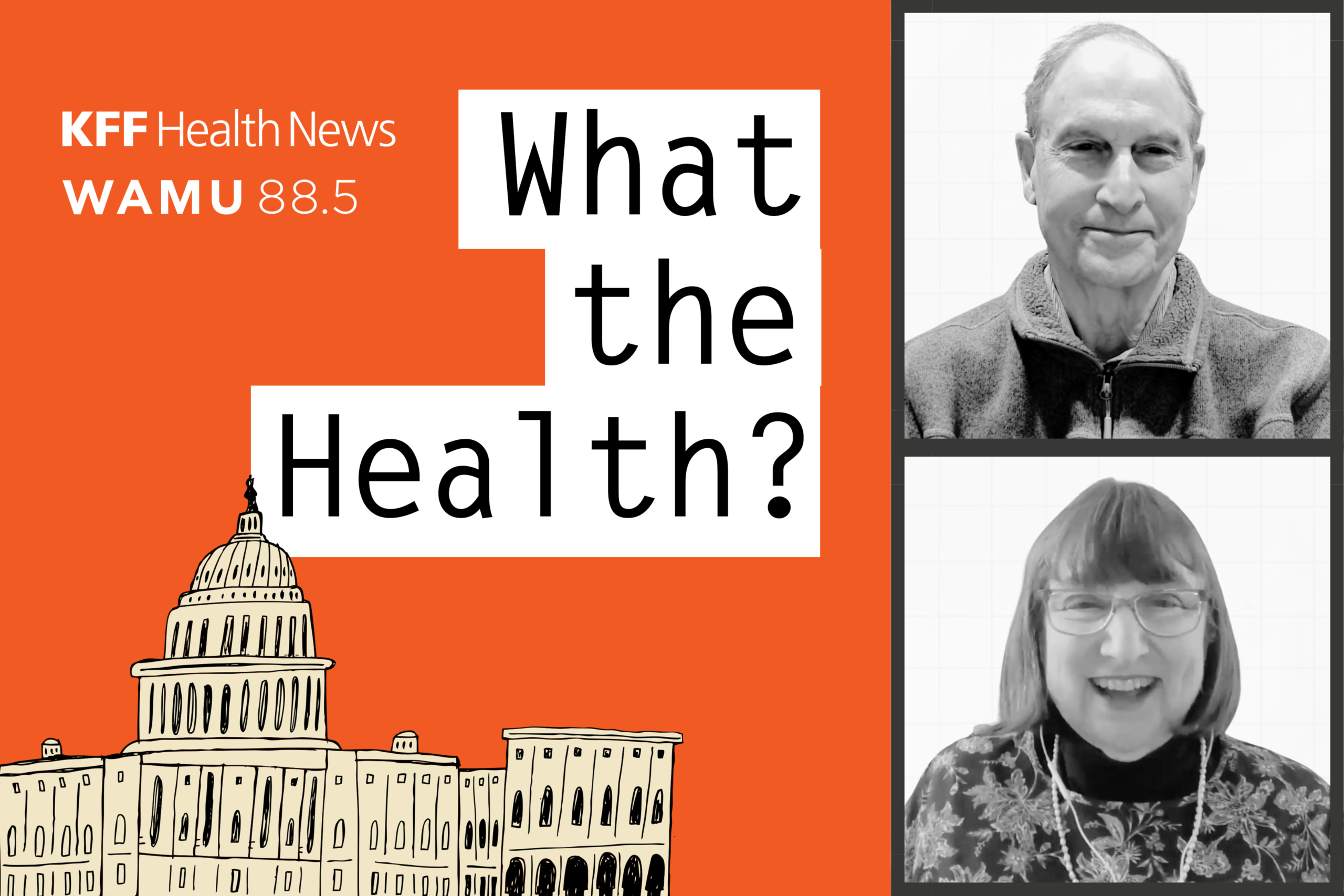
​In this “How Would You Fix It?” interview, Julie Rovner, KFF Health News’ chief Washington correspondent and host of the What the Health? podcast, sat down with David Blumenthal — a physician, health policy expert, former Obama administration official, and author — to explore the dynamics that make fixing the nation’s health care system so difficult.

They discussed the pivotal role the president of the United States plays in health policy — whether it is building support for or opposition to new plans and proposals. “Presidents have a level of authority which is often underappreciated, especially in health care,” Blumenthal said.

Blumenthal and Rovner also discussed the historical reasons the U.S. has been unable to enact universal health care, incrementalism versus sweeping change, and what he described as “the dance” between proponents and opponents — usually a clear party-line split between Democrats and Republicans — of major health care reforms.

Today, the split seems to have come to a head, as public health, science, and expertise are being viewed by one end of the political spectrum as “the opposition,” Blumenthal said, which will complicate efforts. Still, he outlined ideas for moving forward.

An abbreviated version of this interview aired April 23 on Episode 443 of What the Health? From KFF Health News: “RFK Jr. vs. Congress.”

Blumenthal’s latest book, Whiplash: From the Battle for Obamacare to the War on Science, co-written with James A. Morone, offers a behind-the-scenes look at how three presidential administrations pursued very different health policy goals.

KFF Health News is a national newsroom that produces in-depth journalism about health issues and is one of the core operating programs at KFF—an independent source of health policy research, polling, and journalism. Learn more about KFF.This <a target=”_blank” href=”https://kffhealthnews.org/health-industry/health-care-policy-political-divide-david-blumenthal-interview/”>article</a&gt; first appeared on <a target=”_blank” href=”https://kffhealthnews.org”>KFF Health News</a> and is republished here under a <a target=”_blank” href=”https://creativecommons.org/licenses/by-nc-nd/4.0/”>Creative Commons Attribution-NonCommercial-NoDerivatives 4.0 International License</a>.<img src=”https://kffhealthnews.org/wp-content/uploads/sites/8/2023/04/kffhealthnews-icon.png?w=150&quot; style=”width:1em;height:1em;margin-left:10px;”>
<img id=”republication-tracker-tool-source” src=”https://kffhealthnews.org/?republication-pixel=true&post=2230749&amp;ga4=G-J74WWTKFM0&quot; style=”width:1px;height:1px;”>  

Continue Reading

HealthNews

RFK Jr. vs. Congress

​The Host

Julie Rovner

KFF Health News

@jrovner

@julierovner.bsky.social

Read Julie’s stories.

Julie Rovner is chief Washington correspondent and host of KFF Health News’ weekly health policy news podcast, “What the Health?” A noted expert on health policy issues, Julie is the author of the critically praised reference book “Health Care Politics and Policy A to Z,” now in its third edition.

Health and Human Services Secretary Robert F. Kennedy Jr. completed his marathon tour of House and Senate committees this week to defend President Donald Trump’s proposed budget for his department, but he got grilled on lots of non-budget matters as well, most notably his proposed changes to the childhood vaccine schedule.

Meanwhile, Trump made some of his own health policy, signing an executive order to facilitate the use of hallucinogens to treat mental health conditions. That action came just days after it was suggested to him in a text message from podcaster/influencer Joe Rogan, who was present in the Oval Office for the signing.

This week’s panelists are Julie Rovner of KFF Health News, Victoria Knight of Bloomberg Government, Alice Miranda Ollstein of Politico, and Sheryl Gay Stolberg of The New York Times.

Panelists

Victoria Knight

Bloomberg Government

@victoriaregisk

Alice Miranda Ollstein

Politico

@AliceOllstein

@alicemiranda.bsky.social

Read Alice’s stories.

Sheryl Gay Stolberg

The New York Times

@SherylNYT

Read Sheryl’s stories.

Among the takeaways from this week’s episode:

There were fewer fireworks than expected during Kennedy’s four-day, whirlwind tour of Capitol Hill. One thing that was clear is that Kennedy got the political memo that he is to watch his vaccine rhetoric and keep the focus on politically palatable topics such as chronic disease and healthy eating. Still, there were episodes of indignation and grandstanding, from the secretary and from lawmakers. Kennedy also sometimes struggled to defend administration proposals to cut funding.

Among members who pressed Kennedy on vaccines was Sen. Bill Cassidy (R-La.), who is facing a difficult primary challenge. Cassidy, a physician, has in the past clashed with Kennedy over vaccines and has been targeted by the Make America Healthy Again movement. In hearings, however, Cassidy led with questions on abortion issues, which fit more aptly into his red-state politics. Meanwhile, though Cassidy’s Senate seat is considered at risk, it’s not clear that the MAHA muscle on the ground is living up to the threat.


Continue Reading

HealthNews

What the Health? From KFF Health News: A New CDC Nominee, Again
​The Host

Mary Agnes Carey
KFF Health News

@maryagnescarey

Mary Agnes Carey is managing editor of KFF Health News. She previously served as the director of news partnerships, overseeing placement of KFF Health News content in publications nationwide. As a senior correspondent, Mary Agnes covered health reform and federal health policy.

President Donald Trump this week nominated a former deputy surgeon general who has expressed support for vaccines to lead the Centers for Disease Control and Prevention. Considered a more traditional fit for the job, Erica Schwartz would be the agency’s fourth leader in roughly a year, should she be confirmed by the Senate. 

And Health and Human Services Secretary Robert F. Kennedy Jr. appeared on Capitol Hill this week in the first of several hearings discussing Trump’s budget request for the department. But the topics up for discussion deviated quite a bit from the subject of federal funding, with lawmakers raising issues of Medicaid fraud, measles outbreaks, the hepatitis B vaccine, peptides, unaccompanied minors, and much, much more. 

This week’s panelists are Mary Agnes Carey of KFF Health News, Anna Edney of Bloomberg News, Emmarie Huetteman of KFF Health News, and Joanne Kenen of the Johns Hopkins University Bloomberg School of Public Health and Politico Magazine.

Panelists

Anna Edney
Bloomberg News

@annaedney

@annaedney.bsky.social

Read Anna’s stories.

Emmarie Huetteman
KFF Health News

Joanne Kenen
Johns Hopkins University and Politico

@JoanneKenen

@joannekenen.bsky.social

Read Joanne’s bio.

Among the takeaways from this week’s episode:

Trump on Thursday named four officials to the CDC’s leadership team. Schwartz, whom he picked as director, is a physician and Navy officer who served as a deputy surgeon general during Trump’s first term. She has voiced support for vaccines and played a key role in the covid-19 pandemic response.

RFK Jr. testified before three committees of the House of Representatives this week on the president’s budget request for HHS. While the hearings touched on a wide variety of topics, notable moments included a slight softening of Kennedy’s stance on the measles vaccine, including the acknowledgment that being immunized is safer than having measles — although he also stood by the decision to remove the recommendation for the newborn dose of the hepatitis B vaccine.

New studies on the use of acetaminophen during pregnancy and the effects of water fluoridation on cognitive function refute Trump administration claims. And a White House meeting that brought together Trump, Kennedy, and other leaders of the Make America Healthy Again movement aimed to so  

Continue Reading

HealthNews

As US Birth Rate Falls, Feds’ Response May Make Pregnancy More Dangerous

​The number of babies born in the United States fell again last year.

This story also ran on CBS News. It can be republished for free.

According to new data from the Centers for Disease Control and Prevention, there were 3.6 million births in 2025, a 1% decline from 2024. The fertility rate dropped to 53.1 births per 1,000 women ages 15 to 44, down 23% since 2007.

The Trump administration has said it wants to reverse this trend. President Donald Trump has called for “a new baby boom,” and aides have solicited proposals from outside advocates and policy groups ranging from baby bonuses to expanded fertility planning. The administration is also proposing to reshape the federal government’s only dedicated family planning program: Title X.

For more than five decades, Title X has been geared — with bipartisan support — toward giving low-income women access to contraception, screening for sexually transmitted infections, and reproductive health care regardless of ability to pay. At its peak, the safety net program served more than 5 million patients a year. Six in 10 Title X clients have reported the program as their sole source of health care in a given year.

In early April, the Department of Health and Human Services invited nonprofit organizations to apply for Title X grants for fiscal year 2027, which begins in October. The 67-page Notice of Funding Opportunity included only one mention of contraception — describing it as overprescribed, associated with negative side effects, and part of a broader “overreliance on pharmaceutical and surgical treatments.”

The grant notification reshapes the program from its traditional public health intervention efforts to focus on fertility, family formation, and reproductive health conditions such as polycystic ovary syndrome, endometriosis, low testosterone, and erectile dysfunction.

While Title X will continue to help women “achieve healthy pregnancies,” the grant document does not explicitly reference preventing unintended pregnancies — a long-standing goal of the program.

Jessica Marcella, who oversaw the Title X program as a senior official in the Biden administration, said the new funding notice amounts to a wholesale redefinition of family planning.

“What we’re seeing is trying to use our nation’s family planning as a Trojan horse for an entirely different agenda,” Marcella said, noting that Trump has proposed eliminating Title X altogether.

Birth Rates and Fertility Trends

The administration is overhauling Title X in the context of declining birth rates. But researchers who study fertility trends say the decline is driven by forces that have little to do with contraception access and that restricting it is unlikely to produce more births.

The most important factors, according to demographer Alison Gemmill of UCLA, are timing-related. “Childbearing is increasingly delayed as part of a broader shift toward later a  

Continue Reading

Latest News

Politics50 minutes ago

‘Mamata has brought something in this’: BJP workers block TMC vehicle in Bhabanipur

 BJP workers claimed that Mamata Banerjee has brought something in her vehicle 

Sports1 hour ago

BREAKING: WWE Officially Drops SummerSlam 2026 Poster – Top Names Missing

​WWE has officially dropped the poster for this year’s SummerSlam. The Biggest Party of the Summer is set to emanate...

Sports1 hour ago

10-time WWE World Champion will return amid uncertainty, says Matt Hardy

​WWE recently had a few retirements under its banner, and the landscape is changing with time. Meanwhile, Matt Hardy thinks...

Sports1 hour ago

Zenless Zone Zero 3.0 new characters: Velina and Norma announced

​The Zenless Zone Zero 3.0 drip marketing campaign has announced Velina and Norma as the upcoming agents.  

Sports1 hour ago

“Mike McCarthy prefers to move on”: Mike Florio claims Aaron Rodgers’ Steelers move collapsed after UFA tender

​Mike Florio has covered Aaron Rodgers for longer than many NFL fans have been alive. As such, the analyst has...

Sports1 hour ago

Ryan Blaney’s wife Gianna shares heart-wrenching story of private battle during birth of first child: “God, please let me hear a cry”

​In a raw and deeply moving account, Ryan Blaney’s wife Gianna Tulio pulled back the curtain on a terryfying medical...

Sports1 hour ago

How to play Freerun mode in Black Ops 7

​With the launch of Season 3 Reloaded, Freerun mode has been reintroduced in Black Ops 7. It first appeared in...

Sports1 hour ago

Former AEW champion hypes up WWE SmackDown debut with a four-word message

​A former AEW champion has hyped up her upcoming debut on WWE SmackDown. On last week’s episode of the blue...

Sports1 hour ago

“End of an era for Penguins” – Fans react as Sidney Crosby, Evgeni Malkin, and Kris Letang likely played their last game together

​The Philadelphia Flyers eliminated the Pittsburgh Penguins from the Stanley Cup Playoffs Wednesday with a 1-0 overtime victory in Game...

Sports1 hour ago

How to unlock and use Eclipse Threads in Saros

​Eclipse Threads in Saros are one of those abilities that genuinely change how the game feels to move through.  

Trending News

Join Our Newsletter

Stay updated with breaking news and exclusive content.