
Connect with us

HealthNews

She Survived 2 Shootings. Research Helps Explain Why Her Pain Persists Years Later.

​In 2019, Mia Tretta, then a high school freshman at Saugus High School in Santa Clarita, California, was struck in the stomach by a round from a .45-caliber semiautomatic handgun fired by a schoolmate. Two students were killed during the attack, including her best friend, and two others were injured.

When she graduated from high school, she enrolled at Brown University, the scene of another shooting in December 2025, while she was studying for finals in her dorm room.

As messages flooded in about an active shooter on campus, she felt pain where she had been shot in the stomach. The college junior experienced a phenomenon she called “phantom bullet syndrome,” similar to phantom limb syndrome, in which someone senses something is there that is not. It occurs whenever she feels extremely stressed, she said.

“It’s crazy to say that the first time, I was the lucky one because though I got shot, I didn’t get killed,” said Tretta, now an anti-gun violence advocate who is studying public affairs and education. “And the second time, I was the lucky one because I was a few blocks away.”

Tretta represents a small but growing cohort of young people who have lived through more than one shooting. She also embodies the findings of a recent study that links gun violence exposure to chronic pain.

The study, published in BMC Public Health in January, found that both direct and indirect exposure to gun violence are linked to higher rates of chronic pain among American adults.

Rutgers University researchers studied six types of gun violence exposure: being shot, being threatened with a gun, hearing gunshots, witnessing a shooting, knowing a friend or family member who was shot, and knowing someone who died by firearm suicide. Using a nationally representative survey of 8,009 people, they found that 23.9% had pain most days or every day, while 18.8% said they had a lot of pain.

Daniel Semenza, the study’s lead author, told The Trace that whether someone has lost a person to gun violence or they’ve been shot themselves, their mental and physical health are inextricably linked.

“Your body, through the experience of post-traumatic stress, is going to feel as if it’s happening over and over and over again,” said Semenza, the director of research at the New Jersey Gun Violence Research Center and an associate professor at Rutgers University.

Tretta underwent surgeries to remove the bullet, she said, and later received a nerve block to address ongoing pain from her injuries. But the bullet fragments remain in her body years later, she said.

She was also diagnosed with psoriatic arthritis — a chronic disease causing swelling, pain, and stiffness in the joints.

“I have dealt with chronic pain, immunodeficiencies, and bodily differences ever since the shooting happened,” Tretta said. “Every time I get a fever, it’s a completely different thing than anyone else I know, or even pre-shooting for me. I shake un  

Continue Reading
Click to comment

Leave a Reply

Your email address will not be published. Required fields are marked *

HealthNews

Journalists Share Latest on Baby Formula Safety, Estrogen Patches, and Postcancer Costs

​Céline Gounder, KFF Health News’ editor-at-large for public health, discussed the results of the FDA’s largest baby formula safety test on CBS News 24/7’s The Daily Report on April 29. She also discussed how women seeking treatment for menopause symptoms are facing a shortage of estrogen patches on CBS News’ CBS Mornings on April 27.

Click here to watch Gounder on The Daily Report.

Click here to watch Gounder on CBS Mornings.

KFF Health News senior correspondent Renuka Rayasam discussed the rising cost of postcancer care on WUGA’s The Georgia Health Report on April 24.

Click here to hear Rayasam on The Georgia Health Report.

Read Rayasam’s “They’re in Remission, but Their Medical Bills Aren’t: Cancer Survivors Navigate Soaring Costs.”

KFF Health News is a national newsroom that produces in-depth journalism about health issues and is one of the core operating programs at KFF—an independent source of health policy research, polling, and journalism. Learn more about KFF.This <a target=”_blank” href=”https://kffhealthnews.org/on-air/on-air-may-2-2026-baby-formula-safety-test-menopause-postcancer-care-costs/”>article</a&gt; first appeared on <a target=”_blank” href=”https://kffhealthnews.org”>KFF Health News</a> and is republished here under a <a target=”_blank” href=”https://creativecommons.org/licenses/by-nc-nd/4.0/”>Creative Commons Attribution-NonCommercial-NoDerivatives 4.0 International License</a>.<img src=”https://kffhealthnews.org/wp-content/uploads/sites/8/2023/04/kffhealthnews-icon.png?w=150&quot; style=”width:1em;height:1em;margin-left:10px;”>
<img id=”republication-tracker-tool-source” src=”https://kffhealthnews.org/?republication-pixel=true&post=2233479&amp;ga4=G-J74WWTKFM0&quot; style=”width:1px;height:1px;”>  

Continue Reading

HealthNews

Prevention Efforts Increasingly See Suicide Through a Broader Lens
​If you or someone you know may be experiencing a mental health crisis, contact the 988 Suicide & Crisis Lifeline by dialing or texting “988.”

Someone in America dies by suicide every 11 minutes. It’s that common. But that doesn’t make it normal.

Humans have evolved over centuries to survive. So when people try to kill themselves, something has gone wrong. Typically, the assumption is that something happened in the person’s mind — a mental illness.

That’s led prevention efforts to typically focus on connecting people with treatment in moments of crisis.

But that’s changing. There’s a growing movement asking a different question: What went wrong in the world around that person?

During the covid pandemic, rates of anxiety and depression spiked — not because everyone’s brain chemistry suddenly changed but because the world changed. People were out of work, isolated, struggling to make ends meet.

That led many people in the mental health advocacy world to call for a broader approach. Treatments and crisis care are vital, they say, but the goal of suicide prevention needs to expand beyond stopping people from dying to also giving them reasons to live.

Decades of research supports this idea. Interventions that improve people’s lives and prospects, such as running food banks to ensure families don’t go hungry or hosting weekly book clubs for homebound seniors to make friends, can reduce suicide.

I spoke with Chris Pawelski, a fourth-generation farmer in Orange County, New York, for this story. He told me how his dad’s passing, caring for his mom with dementia, and the struggling finances of his family’s onion farm brought him to consider suicide.

“It’s all stuff collapsing down upon you,” he said. “It’s weeks, months, years of dealing with all sorts of pressures that you can’t alleviate.”

What helped him through that time was not just family support and therapy. It was also an economic plan. He worked with an organization called NY FarmNet, which provided a free financial consultant who helped Pawelski transition from farming onions for wholesale to a new model, growing varied produce to sell directly to consumers.

Today, Pawelski’s business has stabilized, and he and his wife are paying down debt. He advocates for programs to help others in similar situations.

That can mean crisis hotlines and access to affordable therapy, Pawelski said. But what he really wants are policy changes that help people address underlying hardships before a crisis strikes.

“We need to think broader and longer-term than a helpline,” he said. That’s “a band-aid on a gunshot wound.”

ELEVEN MINUTES

Saving Lives by Changing Lives: The Next Frontier in Suicide Prevention

Someone in America dies by suicide every 11 minutes. It’s a tragic  

Continue Reading

HealthNews

When Natural Disasters Strike, Another Crisis Hits Those Recovering From Opioid Addiction
​If you or someone you know is seeking help for addiction recovery, contact the free and confidential treatment referral hotline, 1-800-662-HELP, or visit findtreatment.gov.

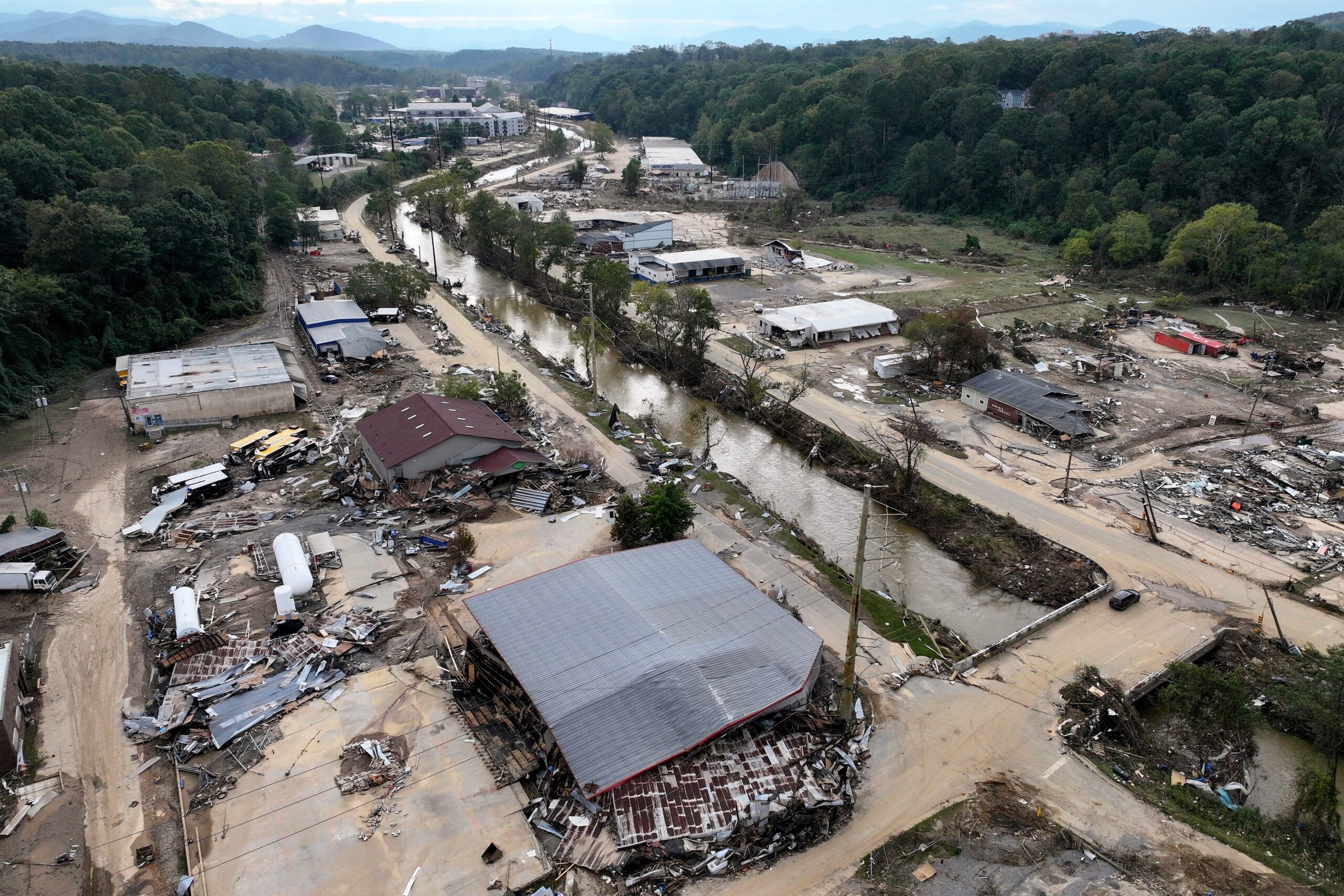
A day after Hurricane Helene ripped through western North Carolina in late September 2024, Toni Brewer had no power or water. The storm had strewn fallen trees across most roads, wiped out phone and internet communications, and put some neighborhoods near her Asheville home underwater.

Brewer cleared out the food in her refrigerator, grabbed some clothes, and drove more than an hour southwest with her partner to Franklin, to stay with relatives.

When she arrived, she opened the center console of her car, where she kept medication, and discovered another crisis. She had only three days’ worth of Suboxone, a brand of buprenorphine, a prescription drug that eases opioid cravings. Without it, she risked relapsing into a life she described as miserable.

She recalled what it felt like to have those cravings and panicked.

“It’s terrifying just to have that feeling again of, ‘I need this, and I’ll do whatever it takes to get this,’” said Brewer, who had been in recovery from opioid addiction for 18 months at the time. She needed a new prescription but knew communication lines at her doctor’s office were down.

Now, a group of doctors is using the example of Hurricane Helene to urge federal lawmakers to help improve access to substance use medications in severe weather emergencies. Four physicians working in addiction medicine published an American Journal of Public Health editorial that outlines strategies for getting medication to people in recovery during natural disasters.

As climate change threatens to cause an increased number of disasters in the U.S., the group of doctors urged state and federal governments to act soon or risk allowing more disasters to aggravate overdoses, relapses, and deaths caused by opioid use disorder, an ongoing epidemic that has killed more than 800,000 people in the U.S. since 1999.

One study estimated that after Superstorm Sandy in 2012, 70% of New Yorkers who relied on recovery medications couldn’t get enough of them. In the two years following Hurricane Maria’s devastation in Puerto Rico in 2017, overdose reports increased, another study found. The Tubbs and Camp fires in Northern California caused substantial disruptions in patients’ access to opioid addiction medications, found a study published in 2022.

A combination of factors aggravates the opioid crisis in the U.S., the AJPH editorial authors noted. Mental health stressors, treatment disruptions, drug market volatility, and economic decline all create conditions in which climate-related disasters heighten the risk of overdose deaths.

“We make it so challenging for them to access treatment medications in the first place,” said Elizabeth Cerceo, the climate health director at Rowan University’s Cooper Medical School and a co-autho  

Continue Reading

HealthNews

Saving Lives by Changing Lives: The Next Frontier in Suicide Prevention

​If you or someone you know may be experiencing a mental health crisis, contact the 988 Suicide & Crisis Lifeline by dialing or texting “988.”

Someone in America dies by suicide every 11 minutes. It’s that common. But not normal.

Humans have evolved over centuries to survive. So when people try to kill themselves, something has gone wrong. Typically, the assumption is that something happened in the person’s mind — a mental illness.

But in recent decades, there’s been a growing movement to ask a different question: What went wrong in the world around that person?

For Chris Pawelski, it was a torrent of factors. His dad — one of his best friends, whom he worked with daily for decades — was diagnosed with renal cancer and died six months later. Pawelski was left as the primary caregiver for his mom, who had dementia.

His family’s multigenerational onion farm in New York’s Orange County — where he first worked as a 5-year-old, collecting onions that fell out of crates — was hemorrhaging money. Pawelski said he was growing roughly $200,000 worth of crops some years but took home only about $20,000, unable to negotiate higher prices with wholesale buyers that dominated the market.

Debt to suppliers and equipment vendors piled up, and the burden strained his marriage. He had little time for friends, working sunup to sundown seven days a week, desperately trying to preserve his family’s legacy.

“It’s all stuff collapsing down upon you,” he said. “It’s weeks, months, years of dealing with all sorts of pressures that you can’t alleviate.”

Pawelski started wondering what it would be like to get hit by a truck on the busy road in front of his house. “You think you’re already on your way out, so why wait?” he said.

  (Jeffrey Basinger for KFF Health News)

After his father died, Pawelski became his mother’s primary caregiver. Meanwhile he was struggling to preserve his farm — his family’s legacy. “It’s all stuff collapsing down upon you,” he says. (Jeffrey Basinger for KFF Health News)

Millions of Americans have serious thoughts of killing themselves, and tens of thousands die by suicide annually. Suicide repeatedly ranks among the top 10 leading causes of death — making the U.S. an outlier among developed nations.

Prevention efforts have typically focused on connecting individuals in crisis with treatment — despite therapy and medication being notoriously expensive, the healthcare system struggling to meet demand, and a consensus that suicide is caused by a host of factors, including but not limited to mental illness.

Now, many people working to prevent suicide, including some who have tried to harm themselves or lost a loved one to it, are calling for a broader approach. Some were galvanized by the covid pandemic, when rates of anxiety and depression spiked — not because everyone’s brain chemistry suddenly changed but because the world changed.   

Continue Reading

HealthNews

Watch: Acknowledging Health Care’s Great Divide
​In this “How Would You Fix It?” interview, Julie Rovner, KFF Health News’ chief Washington correspondent and host of the What the Health? podcast, sat down with David Blumenthal — a physician, health policy expert, former Obama administration official, and author — to explore the dynamics that make fixing the nation’s health care system so difficult.

They discussed the pivotal role the president of the United States plays in health policy — whether it is building support for or opposition to new plans and proposals. “Presidents have a level of authority which is often underappreciated, especially in health care,” Blumenthal said.

Blumenthal and Rovner also discussed the historical reasons the U.S. has been unable to enact universal health care, incrementalism versus sweeping change, and what he described as “the dance” between proponents and opponents — usually a clear party-line split between Democrats and Republicans — of major health care reforms.

Today, the split seems to have come to a head, as public health, science, and expertise are being viewed by one end of the political spectrum as “the opposition,” Blumenthal said, which will complicate efforts. Still, he outlined ideas for moving forward.

An abbreviated version of this interview aired April 23 on Episode 443 of What the Health? From KFF Health News: “RFK Jr. vs. Congress.”

Blumenthal’s latest book, Whiplash: From the Battle for Obamacare to the War on Science, co-written with James A. Morone, offers a behind-the-scenes look at how three presidential administrations pursued very different health policy goals.

KFF Health News is a national newsroom that produces in-depth journalism about health issues and is one of the core operating programs at KFF—an independent source of health policy research, polling, and journalism. Learn more about KFF.This <a target=”_blank” href=”https://kffhealthnews.org/health-industry/health-care-policy-political-divide-david-blumenthal-interview/”>article</a&gt; first appeared on <a target=”_blank” href=”https://kffhealthnews.org”>KFF Health News</a> and is republished here under a <a target=”_blank” href=”https://creativecommons.org/licenses/by-nc-nd/4.0/”>Creative Commons Attribution-NonCommercial-NoDerivatives 4.0 International License</a>.<img src=”https://kffhealthnews.org/wp-content/uploads/sites/8/2023/04/kffhealthnews-icon.png?w=150&quot; style=”width:1em;height:1em;margin-left:10px;”>
<img id=”republication-tracker-tool-source” src=”https://kffhealthnews.org/?republication-pixel=true&post=2230749&amp;ga4=G-J74WWTKFM0&quot; style=”width:1px;height:1px;”>  

Continue Reading

Latest News

Sports1 hour ago

4 Bloodline WWE Superstars who are involved in the Roman Reigns vs. Jacob Fatu feud

​The Bloodline storyline has once again taken center stage in WWE. Roman Reigns’ ongoing feud with Jacob Fatu has seemingly...

Sports1 hour ago

3 Matches WWE can add to Backlash 2026

​The conclusion of WWE WrestleMania 42 is seen as the beginning of a new year for the Stamford-based promotion, as...

Sports1 hour ago

“I swear to God I got w*t” – When Female Star Opened Up on Roman Reigns Interaction

​Roman Reigns is indeed one of the marquee players in WWE, and his aura is unmatched. Even his fellow superstars...

Sports1 hour ago

Sailor Piece Evolution Fragment guide

​Sailor Piece is an action RPG in which you explore different islands of an anime-based world to complete quests by...

Sports1 hour ago

Chase Elliott speaks out on the mutual respect with Denny Hamlin after a hard-fought victory at Texas: “He and I are racing for wins a lot”

​Following his second win at Texas Motor Speedway in three years, Chase Elliott reflected on the “mutual respect” that defined...

Sports1 hour ago

“I’m grateful” – Takeru expresses deep gratitude to the fans who stayed by his side heading into ONE SAMURAI 1

​Japanese kickboxing icon Takeru Segawa delivered one of the most emotional farewells in combat sports history at ONE SAMURAI 1.  

Sports1 hour ago

Manchester United plot move to sign 21-year-old star who joined West Ham in £38 million deal: Reports

​Manchester United are reportedly planning a move to sign 21-year-old West Ham midfielder Matheus Fernandes this summer.  

Sports1 hour ago

“Failed even on this flat pitch, man he is so so finished” – Fans fume as Rishabh Pant departs for 15 off 10 balls in MI vs LSG IPL 2026 match

​Lucknow Super Giants (LSG) captain Rishabh Pant failed to deliver with the bat again in the IPL 2026 match against...

Sports1 hour ago

“We are sooo scared”: Candace Owens takes swipe after Laura Loomer calls for investigation into her husband’s alleged “immigration fraud”

​Candace Owens issued a mocking response after Laura Loomer questioned the validity of her husband’s citizenship.  

Sports1 hour ago

Stefon Diggs heads to jury selection in assault, strangulation case as WR remains unsigned

​Legal proceedings involving Stefon Diggs are set to move forward, with jury selection scheduled to begin Monday in Massachusetts.  

Trending News

Join Our Newsletter

Stay updated with breaking news and exclusive content.